

Finding Connection in the Quiet Moments Before Bed
A baby sleep ritual creates a sense of safety that allows your baby’s nervous system to relax and drift off. Rather than just a checklist of tasks, these quiet moments of connection like a soft song, a gentle touch, or a whispered phrase act as powerful sleep cues that build trust over time. Starting these habits early, even during the chaotic newborn weeks, provides a consistent pause that helps both you and your baby transition from the noise of the day into a restful state. The value of a bedtime ritual is not found in how elaborate it is, but in the repeated feeling of security it provides night after night.

A consistent bedtime ritual helps your baby feel safe, calm, and connected. Over time, it becomes a gentle sleep cue. Learn how to start early, even in the newborn stage, and why these small, repeated moments matter more than the routine itself.
Bedtime can easily turn into a series of quick steps, especially when everyone is exhausted. What gets lost in that rush are the small moments you never get back, the ones that become memories before you even notice they’re gone.
A nightly ritual doesn’t have to be elaborate. A soft song, a whispered phrase, a gentle touch. Something repeated, something familiar. Over time it becomes more than a step toward sleep it becomes a moment your baby starts to look forward to.
Why these small rituals matter more than parents realize
Babies don’t fall asleep because the clock says it’s bedtime. They fall asleep when their nervous system feels safe enough to let go. From birth, they recognize your voice and your rhythm. When that voice shows up the same way, night after night, they learn this is the moment where I can relax.
The ritual itself is usually short. The settling often takes longer. What matters isn’t how long it lasts; it’s the feeling of safety it builds over time.
Start early, even in the newborn haze
Newborn life is chaotic, and that’s exactly why a small ritual matters. It becomes a pause from the noise, a consistent moment of calm for both of you.
It won’t work instantly. That’s fine. With repetition, your baby starts to associate that moment with rest, and eventually it becomes not just comfort but the beginning of how they learn to settle.
When the thought “this is taking forever” creeps in, it can help to reframe it: this is the part that helps their body feel safe enough to rest. That small shift turns effort into intention.
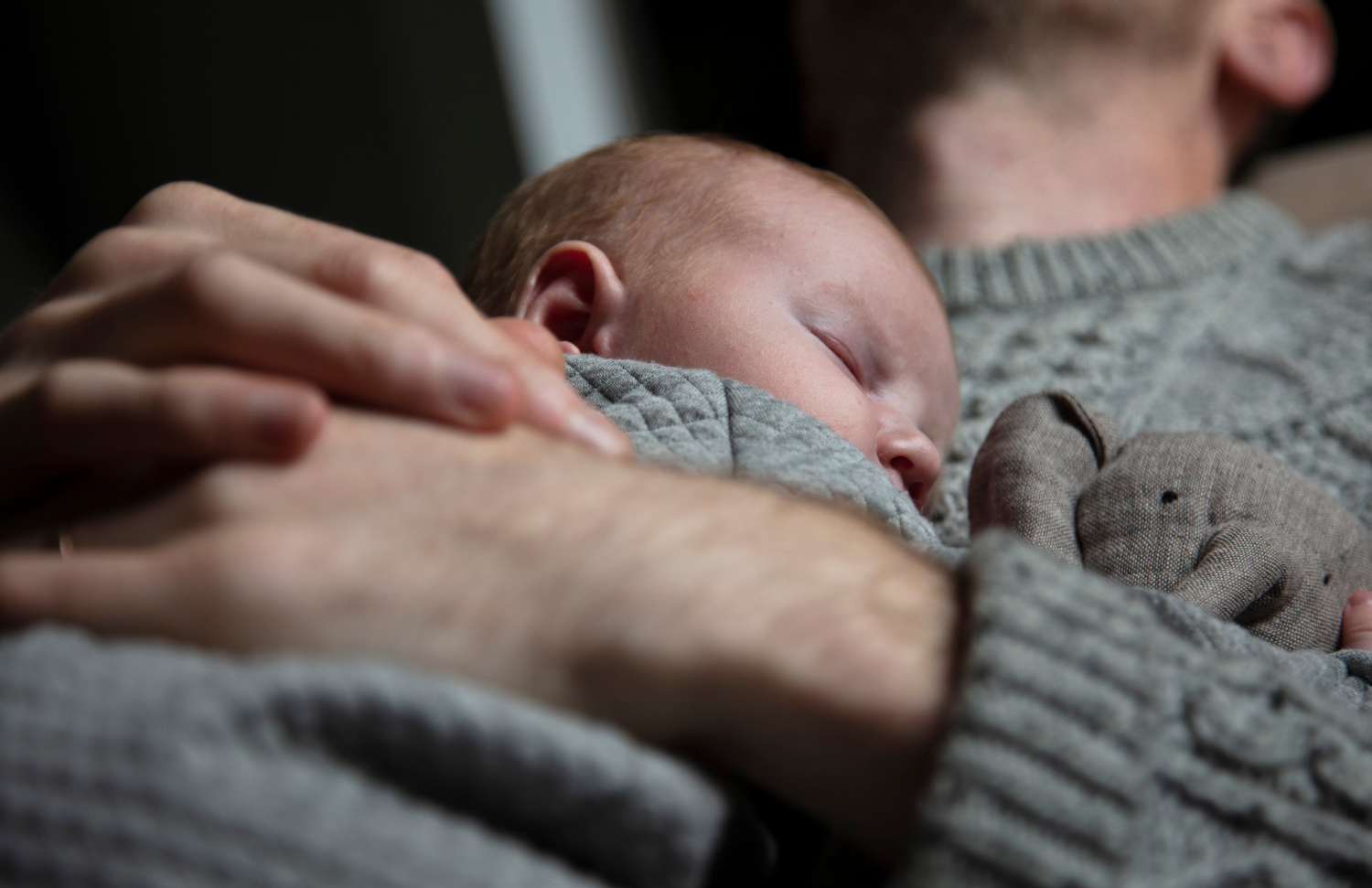
It becomes a gentle sleep cue
Connection creates regulation, and regulation is what allows a baby’s nervous system to ease into rest. Before babies understand schedules, they understand patterns. The same voice, the same tone, the same closeness their body remembers all of it long before language develops.
There’s another reason these matters: babies haven’t yet developed object permanence. When they can’t see you, their brain assumes you’re gone. A consistent ritual gives their nervous system something to hold onto, which makes it easier to release into sleep.
Your ritual can be anything that feels natural
Your baby isn’t listening for melody or poetry. They’re listening for you. Some parents sing, some hum, some simply rest a hand on the baby’s chest or repeat one quiet phrase.
A few simple options: soft humming or slow breathing they can feel against you, a whispered phrase like “I’m here, it’s time to rest,” a gentle touch on the forehead or cheek, a rhythmic pat, or one short line spoken in the same calm tone every night.
It’s not the performance that matters. It’s the familiarity.
A moment that lasts longer than the phase
When I started these rituals with my own children, I thought I was only helping them fall asleep. I didn’t realize I was building something that would stick. Even now that they’re teenagers, on the days when they feel tender or need extra comfort, they still come back to that same song. I’m not a good singer, honestly a little tone-deaf and it has never mattered once. What they come back to is the feeling. What started as a way to get through bedtime became a memory of safety they carried forward without ever noticing when it formed.
The Science Is On Your Side
Pediatric research consistently shows that babies fall asleep more easily when they feel safe and regulated first. The American Academy of Pediatrics supports calming, connection-based routines because babies learn through repetition and sensory cues, not schedules.
Developmental experts also confirm that because newborns lack object permanence, voice, touch, and predictable closeness act as a kind of bridge keeping them feeling connected as they drift toward sleep. Harvard’s Center on the Developing Child explains that babies learn to regulate through a caregiver before they can do it on their own.a process they describe as serve and return.

The Wrap Up
In the newborn stage, bedtime can feel repetitive and exhausting. Feedings blur together, the clock barely matters, and some nights seem endless. It is easy to slip into “survival mode” and focus only on getting your baby asleep as quickly as possible.
That is exactly why these small rituals matter so much.
A soft phrase repeated every night. The feeling of your hand on their chest. The same quiet hum in the dark. These moments may seem tiny to you now, but for your baby, they become part of how safety feels.
Over time, your baby begins to recognize the rhythm of connection before they ever understand words or schedules. Their body learns that this moment is familiar. Predictable. Calm. That familiarity helps them settle into rest little by little.
And something else quietly happens along the way.
These rituals begin shaping memories for you, too.
One day the late-night rocking will end. The tiny pajamas will disappear. The crib will become a bed, and eventually they will stop asking you to stay for “one more minute.” But the feeling created during these quiet bedtime moments often stays much longer than parents expect.
Children may not remember every song or phrase exactly, but they remember the emotional imprint of being comforted consistently. They carry forward the feeling of being safe, soothed, and loved.
That is why this is never really just about sleep.
You are building trust. Connection. Familiarity. A steady place for your baby’s nervous system to land at the end of the day.
And even on nights when it feels repetitive or slow, those quiet moments are still doing important work.
FAQ: Baby Sleep Rituals and Bonding
❓ When should I start a baby sleep ritual? As early as the newborn stage. In those first months it’s not about training sleep, it’s about creating a rhythm your baby will eventually recognize as safety and comfort.
❓ How is a sleep ritual different from a bedtime routine? A bedtime routine is the sequence of steps: bath, pajamas, feeding. The sleep ritual is the emotional moment inside that routine, the part your baby connects with feeling safe. The routine prepares the body; the ritual settles the nervous system.
❓ Does this actually help a baby sleep better? Yes. When a baby’s nervous system feels calm and held, sleep comes more easily. The ritual becomes a cue their body recognizes a signal that it’s safe to rest.
❓ How long should a baby sleep ritual last? It can be very short, ten seconds, a minute. The settling afterward often takes longer, and that’s completely normal. The goal isn’t speed.
❓ What if my baby still cries during the ritual? Crying before sleep is how babies release tension, not a sign something’s wrong. The ritual anchors them through that release so they’re not going through it alone.
❓ Do I need to sing? What if I can’t carry a tune? Not at all. Your baby isn’t listening for a good voice; they’re listening for something familiar. A whispered phrase, soft humming, or a gentle touch works just as well.
❓ Will this help with separation anxiety later? It can. Because babies don’t yet understand object permanence, a consistent ritual becomes a bridge of connection that helps them feel held even as their eyes close.
❓ Can both parents use the same ritual? Yes, and it actually deepens the bond. When the rhythm or phrase is familiar, babies learn to feel safe with either caregiver.
❓ Does this work for naps too? A shorter version before naps works well. It gives the baby a smaller cue that wind-down time is coming, which helps build a more predictable sleep rhythm overall.