

Causes, Symptoms, and Treatment
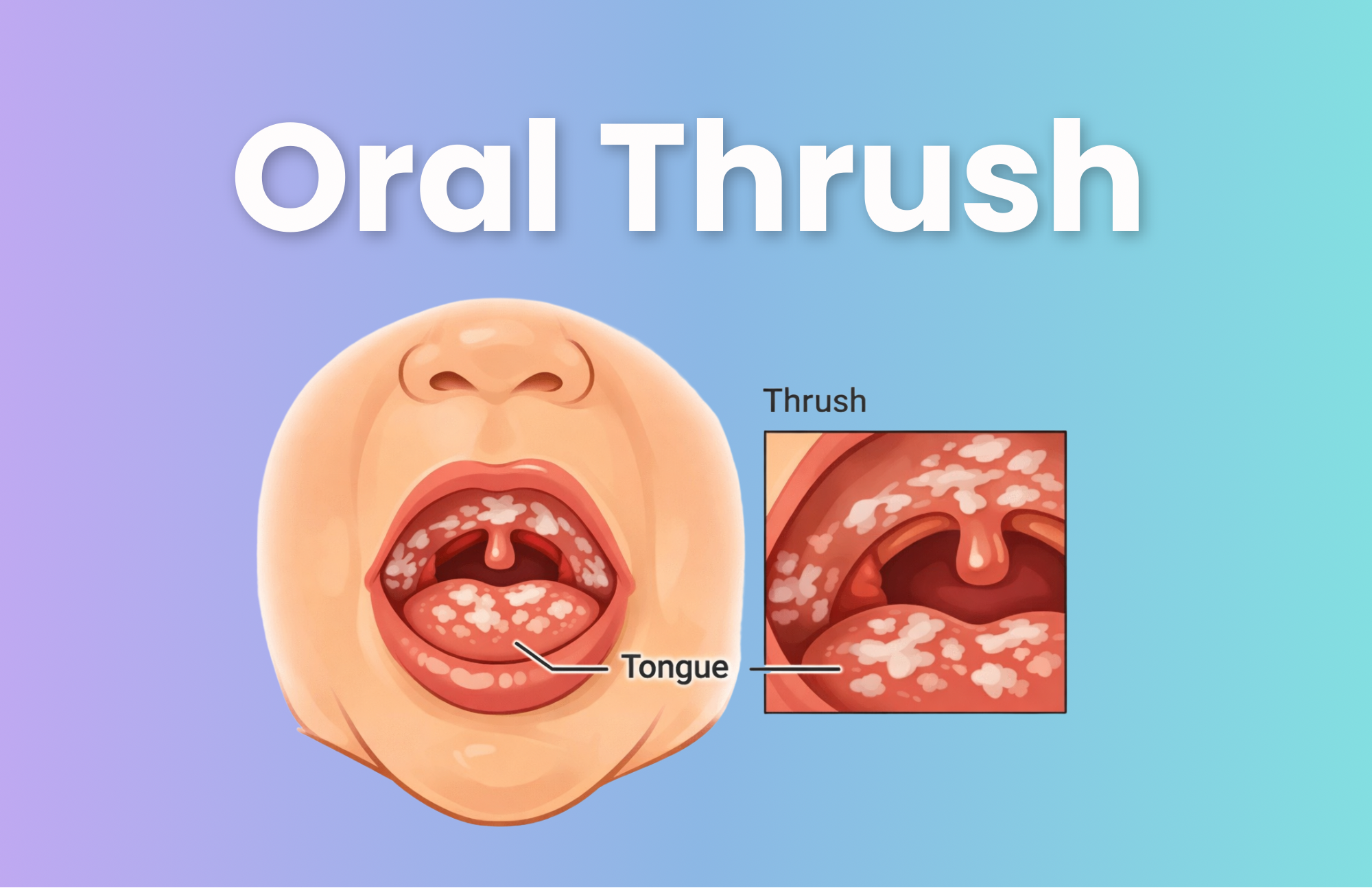
Oral thrush is a common yeast infection in babies caused by Candida albicans. It shows up as white patches inside the mouth that don’t wipe away easily. Pediatricians typically treat it with antifungal medication like Nystatin. If you’re breastfeeding, treating both you and your baby at the same time is important otherwise the infection tends to go back and forth.
Why are there white patches in my baby’s mouth?
You’re feeding your baby during one of those quiet moments that almost makes you forget how tired you are. Then you notice something. White patches on their tongue, a few more on the inside of their cheeks. You try wiping them away with a soft cloth and nothing comes off.
Your brain immediately starts running through possibilities. Take a breath. Oral thrush is very common in newborns and young babies, and most cases clear up quickly once treatment starts.
What exactly is oral thrush?
Oral thrush is a yeast infection caused by an overgrowth of Candida albicans, a fungus that lives naturally in the mouth. Normally, healthy bacteria keep yeast levels in check. In newborns, whose immune systems are still developing, that balance is easier to tip.
Classic signs of oral thrush:
- Thick white patches on the tongue, gums, lips, or inner cheeks
- Patches that look like cottage cheese and stay put when you try to wipe them
- Red or irritated skin underneath
A few things make thrush more likely: newborns are still building their natural defenses, and antibiotic use whether the baby’s or a breastfeeding parents can wipe out the good bacteria that normally keep yeast in check.
How to treat and prevent thrush
The good news? Oral thrush is very treatable, and most babies start feeling better pretty quickly once treatment begins. Pediatricians commonly prescribe antifungal medications like Nystatin or Fluconazole to help clear the yeast causing those stubborn white patches. Treatment usually lasts about 7 to 14 days, depending on how severe the thrush is and how your baby responds. Even if things start looking much better after a few days, keep using the medication exactly as prescribed. Yeast loves to linger when treatment stops too early, and nobody wants this little unwelcome guest making a comeback.
A few things that help speed up recovery:
- Sterilize feeding equipment daily. Boil or sanitize pacifiers, bottle nipples, and breast pump parts throughout the treatment period. Yeast can linger on these surfaces and reinfect your baby.
- Treat both parent and baby if breastfeeding. Treating only the baby often leads to the infection cycling back. Your provider may recommend an antifungal cream for your nipples as well.
- Keep things dry. Candida thrives in warm, moist environments. Letting nipples and pacifiers dry out between uses makes a real difference.

When to call the pediatrician
Thrush is usually mild, but it can become uncomfortable enough to interfere with feeding.
Call your pediatrician if:
- Your baby starts refusing feeds or seems to be in pain while sucking
- The patches spread quickly or turn deep red
- Symptoms aren’t improving after a few days of medication
- Your baby develops a fever
The Wrap Up
Noticing white patches in your baby’s mouth can definitely feel concerning, especially during those newborn weeks when everything is new and you’re still learning what’s normal and what isn’t. One minute you’re enjoying a peaceful feeding, and the next you’re Googling mouth infections while holding a baby in one arm and reheating your coffee for the third time.
But here’s something important to remember: many of the things you’ll run into during the newborn stage are common and usually manageable with the right guidance and care. In this case, oral thrush is very common in babies, very treatable, and most cases clear within a couple of weeks.
Learning how to recognize and manage these little bumps along the way helps parenting feel less overwhelming over time. The more confident you become handling the small things, the more space you’ll have to slow down and enjoy the beautiful moments with your baby.
FAQ: What parents are asking about thrush
❓ How do I know if it’s milk residue or thrush? Milk residue wipes away easily with a damp cloth. Thrush patches are firmly attached and may leave a raw, red spot if you try to rub them off.
❓ Is oral thrush painful for babies? It depends on the baby. Some aren’t bothered at all. Others get fussy during feeds because the patches can feel irritated when they suck.
❓ Can I still kiss my baby if they have thrush? Normal affection is fine. Thrush is caused by yeast that already lives naturally on the body; it’s a balance issue, not a straightforward contagious illness.
❓ Can oral thrush spread to the diaper area? Yes. The yeast can travel through the digestive tract and cause a bright red, bumpy diaper rash. If you notice that, mention it to your doctor.
❓ Why does thrush keep coming back? Usually because feeding items weren’t sterilized during treatment, or because a breastfeeding parent wasn’t treated at the same time. Both need to happen together to break the cycle.
❓ Should I stop breastfeeding if my baby has thrush? No. You can keep breastfeeding while you’re both being treated. Rinsing your nipples with warm water and keeping them dry between sessions helps.
❓ How long does it take to clear up? Most cases start improving within a few days of starting medication. The patches usually disappear completely within 1 to 2 weeks.
❓ Is oral thrush dangerous? In healthy babies, it’s a minor infection. It’s worth treating promptly so it doesn’t lead to feeding refusal or affect weight gain, but it’s not something to panic over.