

What It Is, What Helps, and When to Worry
Noticed flaky, yellow, or greasy patches on your baby’s scalp? Learn what cradle cap is, what causes it, what actually helps, and when to call your pediatrician.
Why Your Baby’s Head Looks Flaky
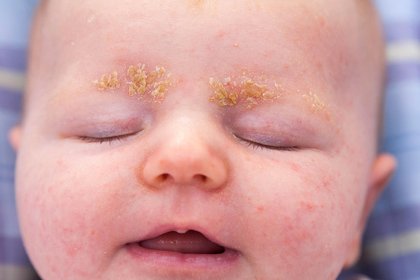
You’re snuggling your baby, admiring that tiny little face, and then you notice it. Thick flakes. Maybe yellow. Maybe greasy. Maybe enough to send your brain straight into, wait… what is that?
That reaction is completely understandable. Baby skin has a special talent for doing strange things at the exact moment you were finally starting to feel confident. The good news: cradle cap is one of the most common and least dangerous skin issues in babies. It’s usually harmless, not contagious, and has nothing to do with poor hygiene.
And here’s what matters most, the cradle cap usually bothers parents far more than it bothers babies. In most cases, it’s a temporary skin change that clears on its own.
What Is a Cradle Cap?
Cradle cap is the common name for infantile seborrheic dermatitis. It usually appears as greasy, flaky, crusty, white, yellow, or brownish scales on a baby’s scalp. On Black and brown skin, it may look like patchy scaling or thicker crusts with white or yellow flakes over oily skin.
The scalp is the classic spot, but similar patches can also appear on the eyebrows, eyelids, ears, behind the ears, neck folds, armpits, face, groin, or diaper area all part of the same condition.
It typically starts between 3 weeks and 2 months of age. Most cases clear by age 1, though some babies have lingering flaky buildup longer.
Why Does Cradle Cap Happen?
Nobody knows the exact cause. The leading theories involve overactive oil glands likely triggered by hormones around birth and a normal skin yeast called Malassezia that tends to thrive in oily areas.
What it’s not: an infection, an allergy, a hygiene problem, or anything contagious. When baby skin looks crusty or dramatic, it’s easy to assume the worst. With a cradle cap, the appearance is usually much worse than the condition itself.
What Actually Helps
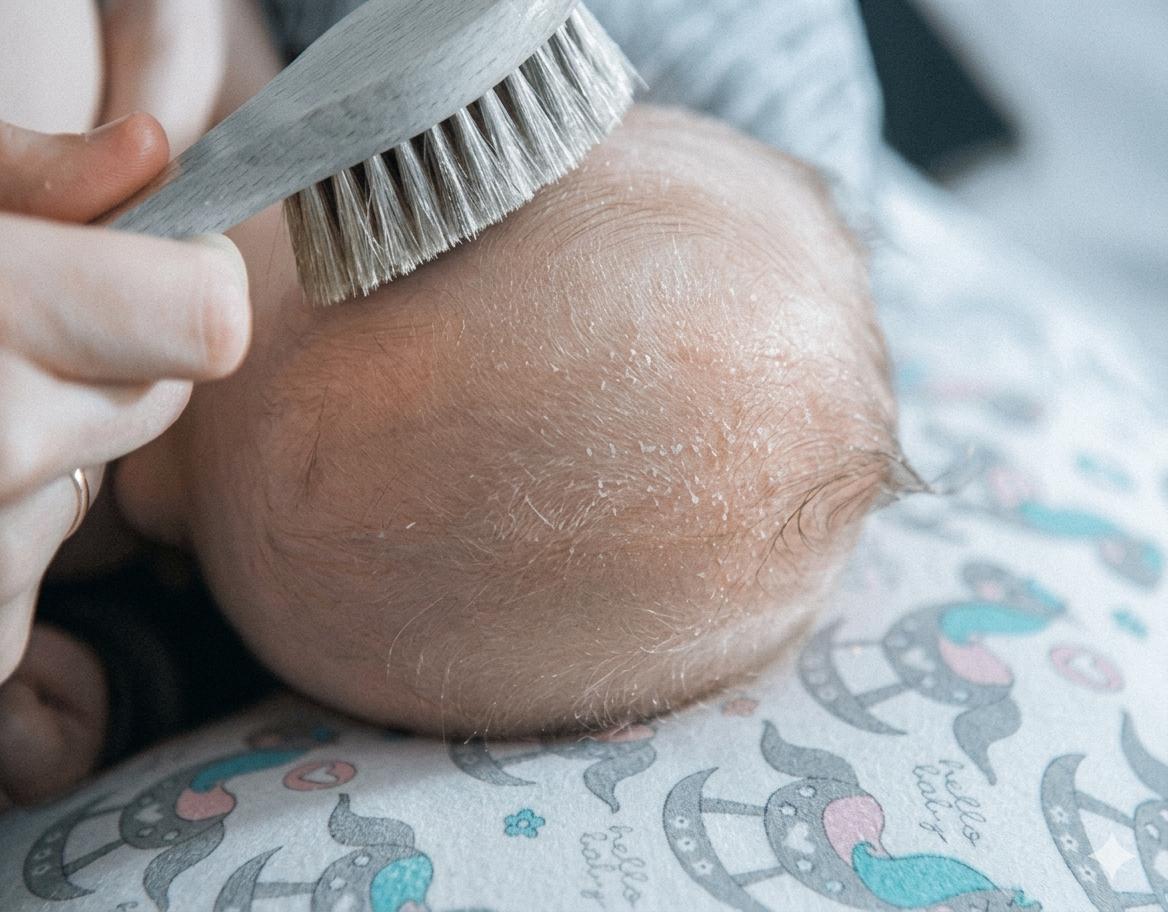
Keep it gentle. Washing your baby’s scalp regularly with a mild, fragrance-free baby shampoo every other day works for most babies, though some sources suggest daily washing can help loosen thicker scales. If your baby has eczema or very sensitive skin, check with your pediatrician before deciding on frequency.
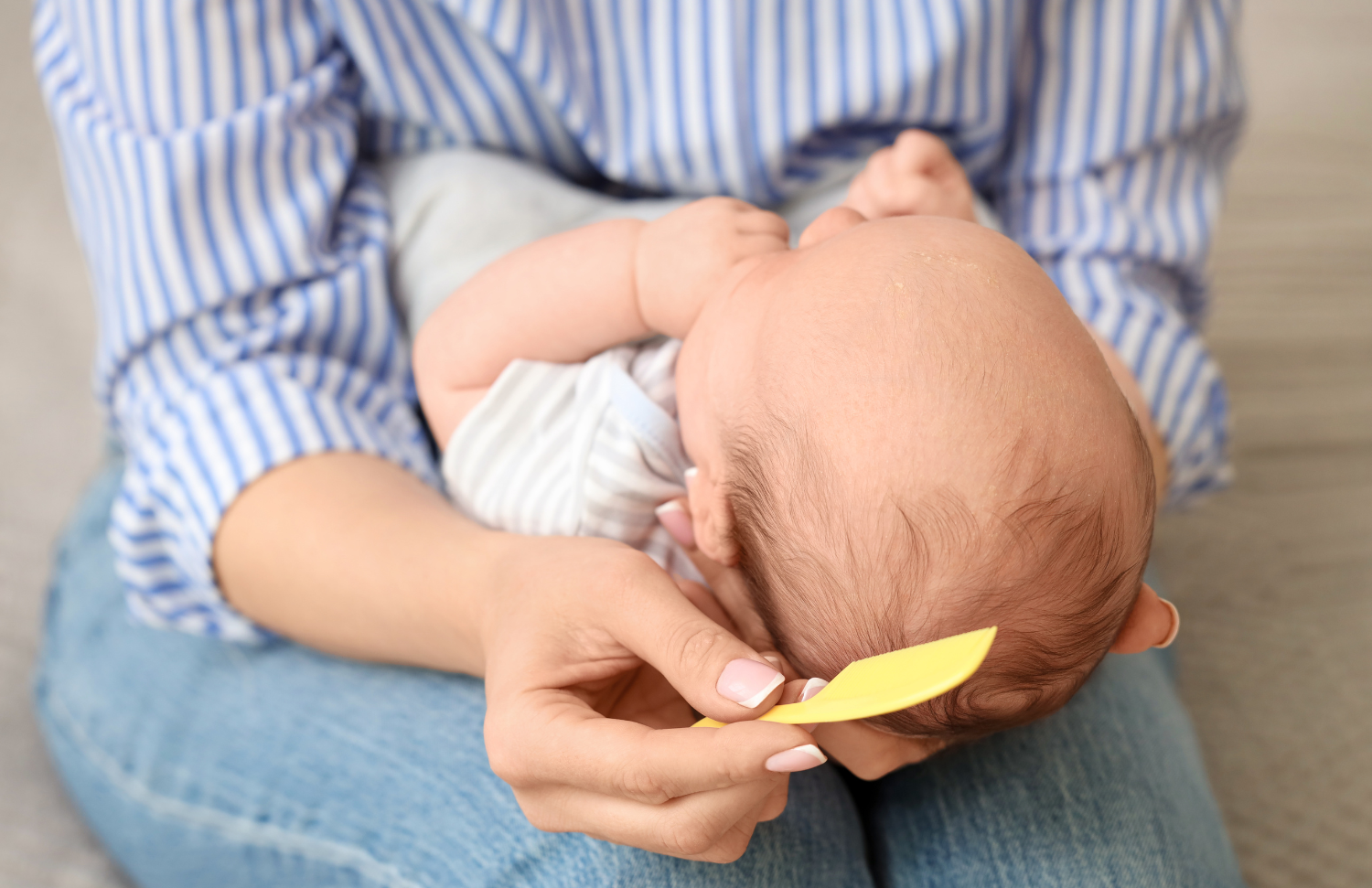
While shampooing, gently massage the scalp with your fingertips, a soft baby brush, or a baby comb to loosen flakes. Don’t scratch, scrape, or pick the scales off that can irritate the skin, cause bleeding, and raise the risk of infection.
For a thicker, more stubborn scale, soften it first with a small amount of mineral oil, baby oil, petroleum jelly, or coconut oil, then wash it out thoroughly. One thing to avoid: olive oil and peanut oil. UK guidance specifically advises against both olive oil may not be good for the skin barrier, and peanut oil is avoided due to allergy concerns.
If home care isn’t helping, or the rash becomes more widespread or inflamed, a pediatrician may recommend a medicated shampoo, antifungal cream, or low-strength hydrocortisone. Don’t start any of those without guidance.
What Parents Usually Miss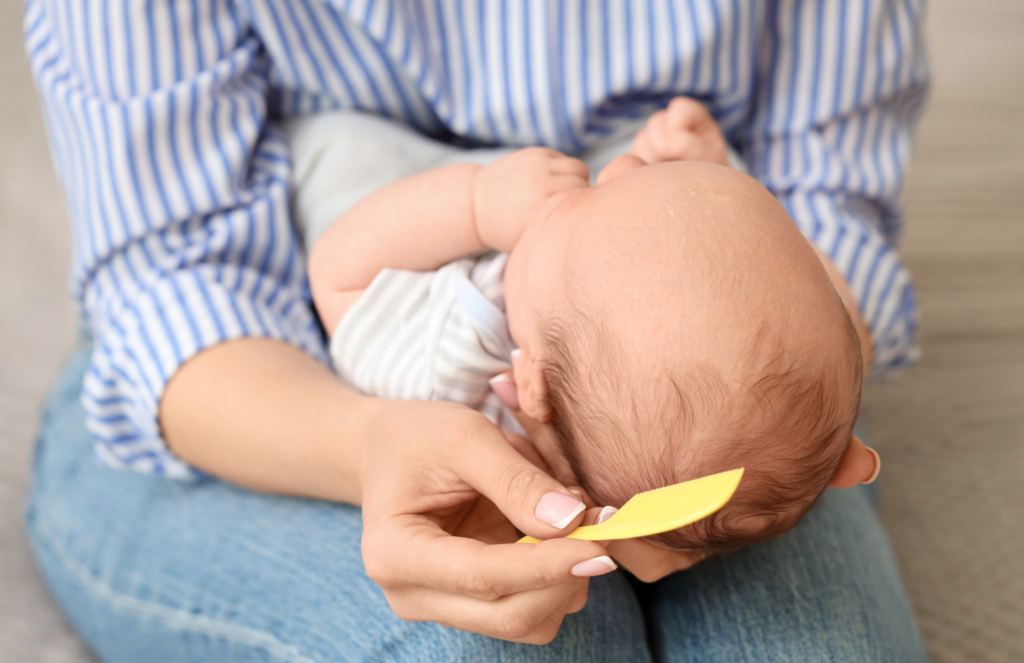
Some hair may come away with the flakes. It looks alarming, but it’s usually temporary and grows back.
Cradle cap is also easy to confuse with eczema. The cradle cap is typically greasy, scaly, and not very itchy. Eczema (atopic dermatitis) tends to be itchier and more inflamed. If your baby seems uncomfortable, keeps rubbing the area, or the rash looks red and irritated rather than greasy and flaky, get it checked.
Also worth knowing treatment is optional in mild cases. The cradle cap often clears on its own, so gentle observation is a perfectly reasonable choice.
When to Call the Pediatrician
Call if the area becomes crusted, weepy, swollen, or smells off or if you notice pus bumps, bleeding, or worsening despite home care. It’s also worth a call if the rash spreads well beyond the scalp, if there’s a raw rash behind the ears, or if it’s still going strong past 12 months.
A couple of age-specific flags: in babies under 1 month, blisters or clustered pimples on the scalp need prompt medical attention. And if your baby seems unwell overall, that conversation comes before the cradle cap one.
The Wrap Up
Cradle cap is one of those classic new-parent moments where something looks dramatic but rarely is. It can be thick, greasy, and honestly unpleasant looking but in most cases it’s harmless and temporary.
A gentle shampoo, a soft brush, and some patience usually do the job. If it starts looking infected or isn’t budging, loop in your pediatrician. Until then, your baby is fine.
FAQ:Everything You Need to Know About Those Crusty Flakes
❓ Is cradle cap normal?
Yes. It’s very common in young babies, usually starts in the first weeks to months, and clears on its own.
❓ Is it contagious?
No. It can’t spread to other babies, siblings, or adults.
❓ Does it mean I’m not washing my baby well enough?
No. It has nothing to do with hygiene.
❓ Is it itchy or painful?
Usually not most babies are not bothered by it. If yours seems uncomfortable, have it checked, since that’s not typical.
❓ Can it spread beyond the scalp?
Yes. Similar patches can appear on the eyebrows, eyelids, ears, neck folds, armpits, groin, and diaper area.
❓ What shampoo should I use?
A mild, fragrance-free baby shampoo is the right starting point. If that’s not enough, ask your pediatrician before trying anything medicated.
❓ Should I wash daily?
Every other day works for most babies. Daily washing may help with thicker buildup. If your baby has eczema or sensitive skin, check with your pediatrician first.
❓ Can I use coconut oil?
Yes, a small amount can help soften thick scales before washing. Just make sure to rinse it out well.
❓ Can I use olive oil?
Best to skip it. Current NHS guidance advises against it because it may not be good for the skin barrier.
❓ Should I peel the flakes off?
No. Loosen them gently with washing and a soft brush don’t scratch or force them off. Picking raises the risk of irritation and infection.
❓ Will my baby lose hair?
Sometimes a little hair comes away with the scales. It looks scary but is usually temporary, and the hair grows back.
❓ How long does it last?
Often weeks to months. Most cases clear by age 1, though some babies have mild lingering flakiness longer.
❓ How do I know if it’s cradle cap or eczema?
The cradle cap is greasy and flaky, and babies usually aren’t bothered by it. Eczema tends to be itchy and more inflamed. When in doubt, have your pediatrician take a look.
❓ When should I worry?
If it becomes weepy, crusted, swollen, smelly, or develops pus bumps; if it bleeds; if it spreads significantly; or if it’s not clearing by 12 months.