

Birth Through the First Birthday
Quick answer
Following the 2026 American Academy of Pediatrics schedule, babies begin immunizations that protect against hepatitis B, rotavirus, diphtheria, tetanus, pertussis, Hib disease, polio, pneumococcal disease, influenza, COVID-19, measles, mumps, rubella, chickenpox, and hepatitis A. Babies may also receive a long-acting antibody for RSV if they were not adequately protected by RSV vaccination during pregnancy.
The main vaccine visits occur at birth, 1 to 2 months, 2 months, 4 months, 6 months, and 12 to 15 months. The exact number of injections varies because some products combine several vaccines in one shot.
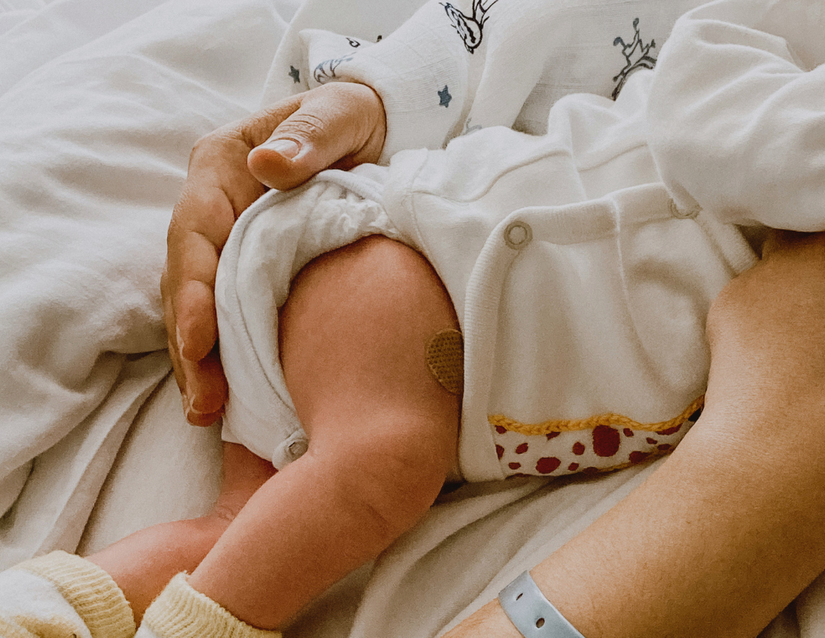
You are sitting in the exam room with a diaper bag on one shoulder and your baby in your arms. Someone hands you a paper with six abbreviations on it: DTaP, Hib, PCV, IPV, RV, and HepB. You nod, because you think you should already know what they mean. Most parents do not. There is nothing wrong with that. Nobody hands you a glossary on the way out of the hospital, and your mental load is at capacity, more than anyone realizes.
So here is the first-year immunization schedule, written in plain language, so you can walk into that room knowing exactly what is on the list and why.
Your baby’s first-year immunizations at a glance
|
Age |
What your baby may receive |
|
Birth |
Hepatitis B, dose 1. RSV antibody protection may be given depending on the season, the baby’s age, and whether the mother received RSV vaccine during the current pregnancy. |
|
1 to 2 months |
Hepatitis B, dose 2 |
|
2 months |
DTaP, Hib, polio, pneumococcal, and rotavirus, all dose 1 |
|
4 months |
DTaP, Hib, polio, pneumococcal, and rotavirus, all dose 2 |
|
6 months |
DTaP and pneumococcal, dose 3. Polio and hepatitis B doses may be given during the 6-to-18-month window. Hib and rotavirus may have a third dose depending on the product used. Annual flu vaccination begins. COVID-19 vaccination begins under the AAP schedule. |
|
12 to 15 months |
MMR, chickenpox, and booster doses of Hib and pneumococcal vaccine. Hepatitis A begins between 12 and 23 months. |
This article follows the 2026 American Academy of Pediatrics immunization schedule. A child’s medical history, previous doses, vaccine products, travel plans, and local disease activity can change the timing.
A note on the two U.S. schedules
In January 2026, the federal childhood schedule changed the recommendation categories for several immunizations. The AAP published an independent 2026 schedule that continues to recommend the routine childhood immunizations described here. Twelve medical and health organizations endorse the AAP schedule. Because recommendations and coverage policies can change, ask your pediatrician which schedule the practice follows and check your health plan if you have coverage questions.
Vaccines given at birth
Hepatitis B, First dose
The first vaccine most babies receive is hepatitis B, usually within 24 hours of birth. Hepatitis B affects the liver. When infection occurs around birth or during infancy, the risk of chronic infection is much higher than it is for adults. The birth dose also provides a safety net if a mother’s infection was not identified before delivery or if the baby is exposed through another household contact. We have to keep in mind that this virus is resilient and can live outside the body for days. Even small amounts of infected blood can transmit the disease. Babies who are learning to walk or crawl are particularly vulnerable since they are prone to scrapes and cuts.
Most babies receive the second dose at 1 to 2 months and the third between 6 and 18 months. Timing differs for some babies with a birth weight under 2,000 grams. A baby born to a mother who tests positive for hepatitis B needs the hepatitis B vaccine and hepatitis B immune globulin within 12 hours of birth, followed by a specific testing and vaccine plan.
RSV protection
RSV is the most common cause of hospitalization in infants, carrying a high risk of lower respiratory tract infections like bronchiolitis and pneumonia that can cause dangerous breathing difficulties and severe dehydration. To prevent these complications, there are two main ways to protect a baby during their first RSV season:
The mother receives Pfizer’s Abrysvo vaccine during weeks 32 through 36 of pregnancy, usually from September through January in most of the continental United States.
The baby receives a long-acting monoclonal antibody, nirsevimab or clesrovimab. These products are immunizations, but they are not vaccines. They provide ready-made antibodies rather than teaching the baby’s immune system to make its own.
Most babies need one approach, not both. An infant antibody is generally recommended for babies younger than 8 months who are born during or entering their first RSV season when the mother did not receive RSV vaccine during the current pregnancy, her vaccination status is unknown, or the baby was born within 14 days after maternal vaccination. Rare exceptions apply when a clinician believes maternal protection may be inadequate.
Timing varies in Alaska, Hawaii, U.S. territories, and parts of Florida because RSV circulation can differ from the rest of the country. Your pediatrician can tell you when protection is recommended where you live.
2 months: the first big appointment
The 2-month checkup is often the visit parents brace for the most, as it is usually a baby’s first experience receiving multiple vaccines at once. It is completely normal to feel anxious about this! However, this visit is strategically timed: it begins building a vital safety net just as a baby’s vulnerable window opens, protecting them from infections that are particularly dangerous in the first year of life.
Here is exactly what these vaccines protect your baby from:
DTaP (Diphtheria, Tetanus, and Pertussis): The most immediate threat to infants here is pertussis, commonly known as whooping cough. While older children might exhibit the classic “whooping” sound, infants are so small that they often do not cough at all. Instead, the infection can cause apnea, or dangerous pauses in their breathing that can be life-threatening.
Hib (Haemophilus influenzae type b): Despite the confusing name, this is a bacteria, not the flu virus. Before this vaccine, Hib was the leading cause of bacterial meningitis (a dangerous inflammation of the lining surrounding the brain and spinal cord) in young children. It also actively protects against severe bloodstream infections and pneumonia.
Polio (IPV): This vaccine protects against the poliovirus, which can cause permanent paralysis. While wild polio no longer routinely circulates in the United States, global travel means the virus can still be imported. Maintaining high vaccination rates is what keeps infants safe from local outbreaks, such as the isolated paralytic case seen in New York in 2022.
Pneumococcal (PCV): This targets a family of bacteria that can rapidly cause severe infections in an infant’s lungs (pneumonia), bloodstream (sepsis), and brain (meningitis). As an added benefit, this vaccine also significantly reduces the risk of common, painful ear infections.
Rotavirus (RV): This is an oral vaccine given as sweet drops in the mouth, not a needle. Rotavirus causes severe vomiting and watery diarrhea. Because babies are so small, this fluid loss can lead to rapid, dangerous dehydration that frequently requires hospitalization for IV fluids.
While getting through the 2-month visit can be emotionally tough for parents, providing your baby with this vital shield of protection is one of the strongest and most effective steps you can take to keep them safe.
4 months: round two
DTaP, Hib, polio, pneumococcal, and rotavirus return for their second doses.
By the time the next round of immunizations approaches, many parents find the visit a little easier to handle. You know the routine, and you have already seen just how quickly your baby can bounce back after a day of extra cuddles and rest.
If you are wondering why babies need to repeat the same vaccines they just received, it comes down to how their developing immune system learns. Think of the first dose as simply introducing your baby’s body to the threat. These follow-up doses act as critical reminders. Each additional dose stacks on top of the last, reinforcing and strengthening that vital safety net so your baby is equipped with the robust, long-lasting immunity needed to fight off the real illnesses.
6 months: the halfway mark
Babies usually receive third doses of DTaP and pneumococcal vaccine. A third polio dose and the final hepatitis B dose are recommended sometime between 6 and 18 months. Whether a baby needs a third dose of Hib or rotavirus at 6 months depends on the product used.
Two additional immunizations also begin at 6 months under the AAP schedule.
Flu vaccine: Annual flu vaccination begins at 6 months. Children ages 6 months through 8 years who have not previously received at least two flu vaccine doses before July 1 of the current season need two doses at least four weeks apart that season.
COVID-19 vaccine: The AAP recommends COVID-19 vaccination for all children ages 6 through 23 months. The number and timing of doses depend on the current product and the child’s previous COVID-19 vaccine history, so ask the pediatrician which formulation is available.
12 to 15 months: the first birthday vaccines
The first birthday is an incredible milestone. As your baby transitions into toddlerhood, they also start expanding their world. They are likely interacting with more people, joining playgroups, or starting daycare. This opens a new window of exposure, which is why several critical vaccines have a recommended window that begins right at the first birthday. They may be given at the 12-month visit or at a later visit within that timeframe.

Here is what these vaccines protect your newly mobile toddler from:
MMR (Measles, Mumps, and Rubella): The most pressing threat here is measles. It is an airborne virus that spreads so easily it can linger in a room long after an infected person has left. Measles is not just a rash. It can cause severe complications like pneumonia and dangerous brain swelling. In 2025, the United States recorded its highest number of measles cases since 1992, making this protection incredibly urgent. Thankfully, two MMR doses are about 97% effective at preventing measles entirely. This shot also protects against mumps (which can cause painful swelling and deafness) and rubella.
Varicella (Chickenpox): People sometimes think of chickenpox as a mild childhood rite of passage, but for toddlers, it can be unexpectedly dangerous. Beyond the misery of hundreds of itchy blisters, the scratched skin can easily lead to serious bacterial infections. The virus itself can also travel to the lungs to cause pneumonia or to the brain to cause swelling (encephalitis). The vaccine completely spares your child from this suffering and prevents the virus from hiding in their body to cause shingles later in life.
Hepatitis A: This is a two-dose series, with the first dose recommended between 12 and 23 months, and the second given at least six months later. Hepatitis A is a highly contagious liver infection spread through contaminated food or close contact. Because toddlers put everything in their mouths and are not yet potty trained, outbreaks in childcare settings are incredibly common. This vaccine stops that spread in its tracks.
Hib and Pneumococcal (PCV) Boosters: You will recognize these from your baby’s first year! Because a toddler’s immune system is still learning, the protection from those initial infant doses naturally begins to fade. These boosters, recommended between 12 and 15 months, powerfully “wake up” the immune system. They lock in a durable, long-term defense against the bacteria that cause meningitis, bloodstream infections, and severe pneumonia.
Reaching the one-year mark means your baby is stronger and more resilient than ever. Providing them with this next level of immunity is the absolute best way to ensure they stay safe and healthy as they confidently step out into the world.
Why so many immunizations so early?
It is completely natural to look at the immunization schedule and wonder if it is too much, too soon. However, these vaccines are meticulously timed for the exact moments when your child is most vulnerable to serious diseases. Young babies face the highest risk of severe complications from the infections on this list. Delaying a dose simply leaves that window of vulnerability open longer than necessary, delaying the essential protection your baby needs.
Parents also frequently worry about overwhelming their baby’s immune system by giving multiple vaccines during a single visit. Rest assured, this is incredibly safe. Vaccines that are given together are rigorously studied to ensure they are both safe and effective when combined. To put it into perspective, a baby’s immune system naturally encounters and fights off thousands of new antigens (germs and foreign particles) every single day just through normal breathing, eating, and playing. The small number of antigens in vaccines is a tiny drop in the bucket compared to what their amazing bodies handle daily.
If it helps ease your mind, try to think of the recommended schedule as a preemptive shield: the goal is to make sure the protection is fully in place well before your baby is ever likely to need it.
What about spreading vaccines out?
As a mom, I completely understand the desire to spread vaccines out. When you are holding your tiny baby, it is incredibly hard to watch them receive multiple pokes at once, and breaking the shots up can easily feel like the gentler option.
However, from a medical standpoint, alternative or delayed schedules have not been shown to be safer. In fact, spacing vaccines beyond the recommended intervals extends the window of time your baby remains vulnerable to these serious diseases, and it requires more frequent trips to the doctor’s office.
That being said, if you are feeling deeply overwhelmed by the standard schedule, please know that many pediatricians are willing to work with you. While sticking to the official recommendation is the safest route, a doctor’s ultimate goal and priority is to protect your child. If taking a little longer is what you need to feel comfortable moving forward, getting the vaccines on a modified schedule is always better than skipping them entirely.
The most important thing is to ALWAYS consult and partner with your pediatrician. If you are worried about a specific vaccine, an ingredient, or the timing, bring that exact concern to your doctor. Together, you can review the evidence, discuss your baby’s unique medical history, and build a plan that prioritizes your child’s health and safety.
What to expect after immunizations
It is always hard to see your baby feeling anything less than 100 percent. However, if your baby acts a little out of sorts after their appointment, try not to worry. These mild reactions are actually a wonderful sign that their tiny immune system is doing exactly what it is supposed to do: working hard to build that protective shield!

Most reactions are mild and improve within a day or two. You might notice:
- Soreness, redness, or a small, firm lump where a shot was given.
- Extra fussiness, extra sleepiness, or a temporary drop in their appetite.
- A mild fever.
- Mild, temporary diarrhea or a little extra spit-up after the oral rotavirus vaccine.
Timing can vary depending on the vaccine. Reactions after most infant vaccines begin within the first 24 to 48 hours. However, vaccines like the MMR or varicella (chickenpox) have a delayed response, so a mild fever or a few faint, scattered red bumps might appear 1 to 2 weeks later.
Comfort measures that can help
You are your baby’s greatest comfort. Nursing, offering a bottle, or even just letting them suck on a pacifier right after the shots can be incredibly soothing. Skin-to-skin contact, extra cuddling, and placing a cool, damp cloth on a sore thigh can also work wonders when you get home. When you are at the office, ask if you can hold your baby securely on your lap during the shots. Being in your arms always feels safer than lying alone on the exam table.
If your baby seems uncomfortable, ask your pediatrician before giving pain or fever medicine to ensure you have the exact dose for your baby’s current weight. Keep in mind that ibuprofen is not used in babies younger than 6 months unless a doctor specifically directs you to use it. It is also not recommended to give fever medicine before the appointment, as you want to let their immune system respond naturally first.
What if your baby falls behind?
If your baby has a mild cold, you usually do not need to reschedule their vaccination appointment. However, if you would rather wait to minimize your baby’s discomfort, that is completely okay too. Just let your pediatrician’s office know. They can create a catch-up plan based on the vaccines your baby has already received, and the series usually does not need to be restarted. Missed appointments happen, and your pediatrician will help you get back on schedule.
The Wrap-up
Nobody walks into that 2-month appointment feeling like an expert. Most parents walk in utterly exhausted, holding their precious baby in one arm and a piece of paper full of intimidating abbreviations in the other. If you feel overwhelmed, please know you are in wonderful company. But now, you know what those letters mean. You know exactly what these vaccines are doing to protect the tiny human you love so much, and you know what to look out for when you get home.
Keep your baby’s immunization record somewhere easy to find, and never be afraid to bring your questions to each visit. Your pediatrician is on your team, and together, you are making the best choices for your child. You are learning how to be a parent one appointment, one milestone, and one day at a time, and you are doing an absolutely incredible job. Your baby is so lucky to have you protecting them.
FAQ: Most common questions about vaccines
❓ Why are there different vaccine schedules in 2026 (AAP vs. Federal)? In early 2026, federal recommendations changed to move several routine childhood vaccines to “shared clinical decision-making”. However, the American Academy of Pediatrics (AAP) continues to strongly recommend the standard routine schedule, as decades of medical evidence show it provides the safest, best defense against contagious diseases.
❓ What does “shared clinical decision-making” mean? This federal update simply means that you and your pediatrician discuss whether your child should receive a particular vaccine based on their unique health needs. Pediatricians continue to strongly recommend these vaccines because the science and safety data supporting them have not changed. It is a conversation, not a medical downgrade!
❓ Will my baby’s vaccines still be covered by insurance? Yes. Even with the recent federal categorization updates, routine childhood immunizations will continue to be covered by insurance and the federal Vaccines for Children (VFC) program. There will be no change to what families pay out of pocket.
❓ Is it safer to separate combination vaccines (like the MMR) into single shots? While recent federal guidance suggested separating the combined MMR vaccine into three single shots, the AAP continues to recommend the standard combination MMR vaccine. Combination vaccines are rigorously tested for safety, reduce the total number of needle pokes your baby has to endure, and ensure they are protected as early as possible without dangerous delays.
❓ How many vaccines does a baby receive in the first year? Under the AAP schedule, vaccines against 16 diseases begin by the first birthday. RSV protection may also be provided through maternal vaccination or a long-acting antibody given to the baby. The number of actual injections varies because combination vaccines safely group several immunizations into one shot.
❓ Is it safe to give my baby multiple vaccines at once? Yes, it is incredibly safe for most babies. Recommended vaccines given together have been extensively evaluated for safety and immune response. A baby’s immune system naturally handles thousands of germs every day, so the remarkably small amount of antigens in vaccines is easily managed.
❓ How long does a fever last after baby shots? A mild fever after many infant vaccines begins within a day or two and is usually brief. Vaccines like MMR and varicella can cause a fever later, often 1 to 2 weeks after vaccination. Remember, any rectal temperature of 100.4°F (38°C) or higher in a baby younger than 3 months requires a prompt call to the pediatrician.
❓ What if my baby missed a shot? Most vaccine series do not need to be restarted. Your pediatrician can easily use a catch-up schedule to determine exactly which doses are needed and when. Don’t stress, missed appointments happen, and your doctor will help you get safely back on track!
Medical sources
Last medically reviewed: August 10, 2026. This article is for education and does not replace care from your child’s healthcare professional.