

What’s Safe and When
Babies under 6 months should stay out of direct sunlight as much as possible and rely on shade, lightweight protective clothing, and wide-brimmed hats for sun protection. Small amounts of mineral sunscreen can be used on exposed areas if shade is unavailable. Most pediatricians recommend waiting until around 6 months before regular pool use because younger babies struggle to regulate body temperature and are more sensitive to germs and pool chemicals. Frequent feeds, cool shade, and constant supervision help keep babies safe during hot weather and water activities.
Planning a trip with your baby? Learn when it’s safe to use sunscreen, when babies can go in pools, and how to protect your newborn from sun and heat.
You’ve planned a getaway with your new baby sunny days, poolside time, a little breathing room. Then the questions hit:
Can I use sunscreen on my baby? Is it safe for them to swim? Will the heat be too much?
These are some of the most common things new parents ask before traveling. Just recently, a mom with a 6-week-old asked me this before her beach trip. She wasn’t thrilled with the recommendations, but she left feeling prepared. Here’s what you need to know.
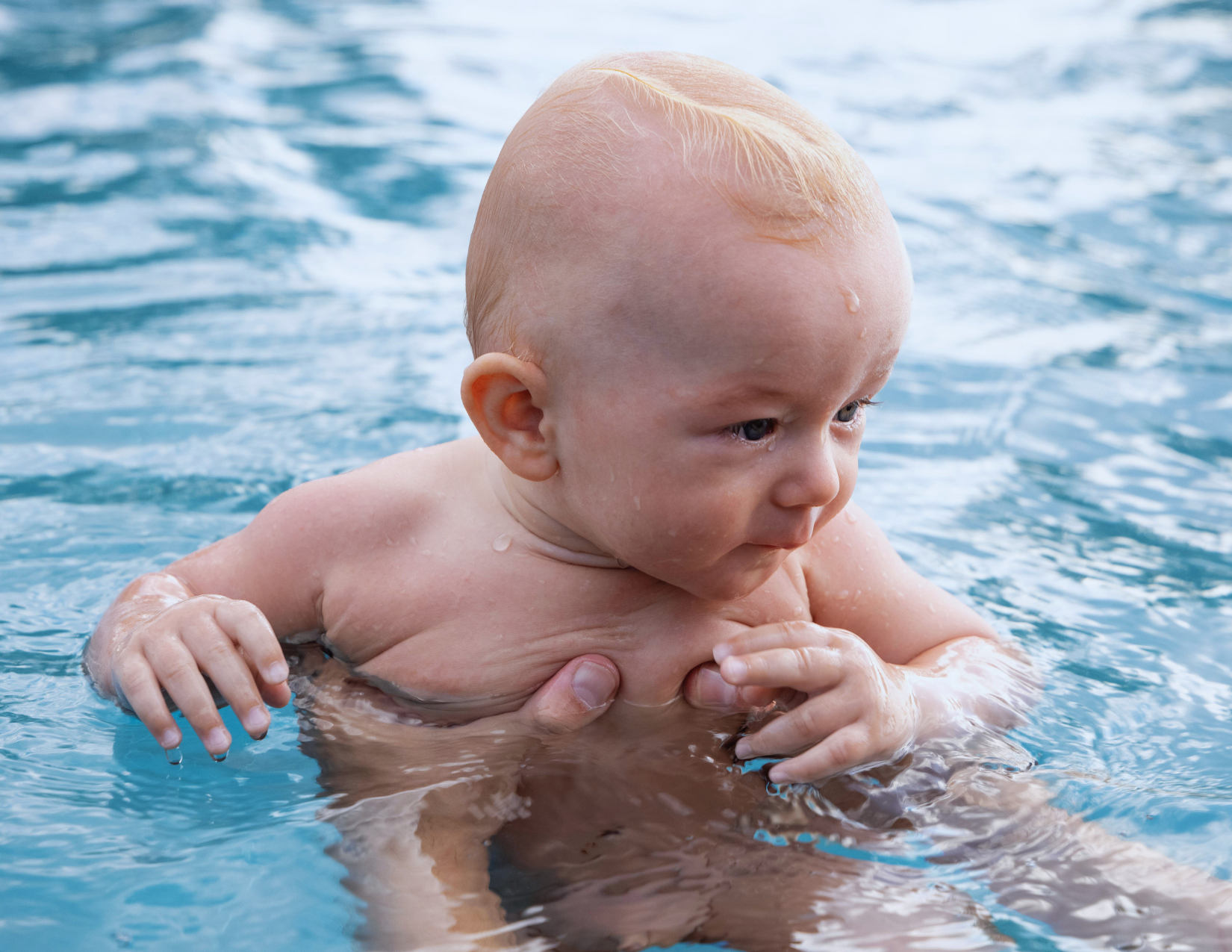
Can You Use Sunscreen on a Baby?
Under 6 Months Old
Shade and protective clothing come first. The AAP recommends keeping babies under 6 months out of direct sunlight as much as possible under a tree, umbrella, or stroller canopy. Dress them in lightweight clothing that covers their arms and legs and use a wide-brimmed hat to protect their face and neck.
If shade genuinely isn’t an option, it’s okay to apply a small amount of mineral sunscreen to exposed areas like the face and backs of the hands. Check with your pediatrician first.
6 Months and Older
Once your baby hits 6 months, you can use broad-spectrum sunscreen with SPF 30 or higher. Look for mineral formulas with zinc oxide or titanium dioxide; these are gentler on sensitive skin than chemical alternatives. Apply 30 minutes before going outside and reapply every two hours, and after swimming or toweling off.
When Can Babies Go in the Pool?
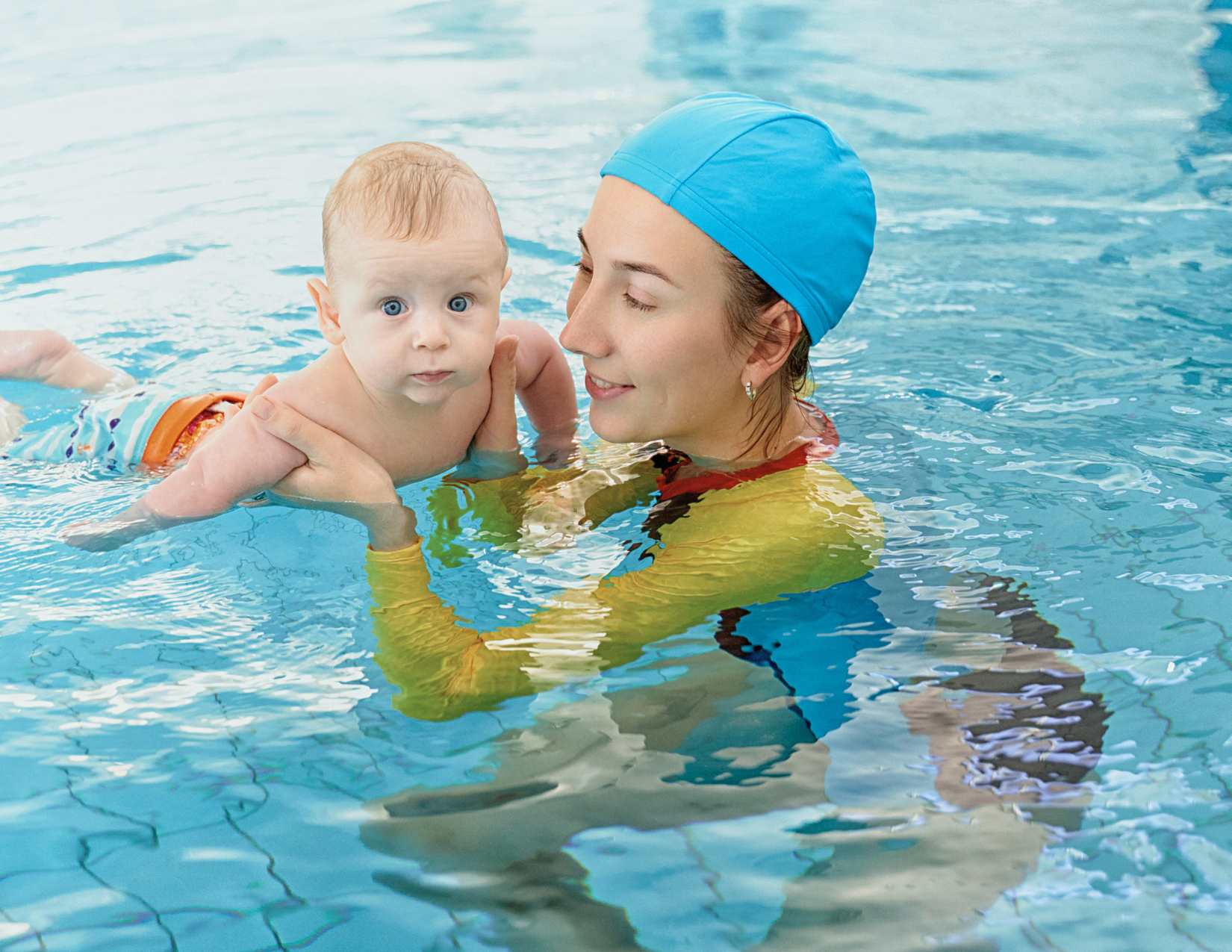
There’s no specific AAP rule setting a minimum age for pool access, but most pediatricians prefer waiting until around 6 months.
Babies under 6 months have a harder time regulating body temperature, so cool water can chill them quickly. Their skin and eyes are more sensitive to chlorine, their immune systems are still developing, and swallowing pool water at this age raises the risk of infection. Talk to your pediatrician before your baby’s first pool visit.
Until then, water play at home, works well with sponge baths, a baby tub, or a quick supervised splash in a shaded inflatable with a little clean water.
How to Keep Baby Cool on a Hot Trip
Hot weather can sneak up on babies much faster than most parents realize. Newborns and young infants are still learning how to regulate their body temperature, which means they can overheat quickly even on days that feel comfortable to adults. The good news is that a few simple habits can help keep your baby cool, comfortable, and safe while you enjoy time outside together.
- Stay in the shade
- Dress in lightweight layers: cotton onesies, breathable rompers, a wide-brimmed hat
- Mist gently with a spray bottle of room-temperature water cold cloths or ice can be too harsh on a newborn’s skin
- Keep feeds frequently; breastmilk or formula handles hydration at this age.
Pool & Sun Safety Checklist
A little preparation can make outdoor trips with your baby feel much less stressful. Having the right essentials nearby helps you respond quickly to heat, sun exposure, wet clothes, and unexpected messes before they turn into an overtired meltdown for everyone involved. Think of this checklist as your simple grab-and-go setup for safer, smoother beach and pool days with your little one.
✅ Umbrella or portable shade tent
✅ Baby-friendly mineral sunscreen (6+ months)
✅ Wide-brimmed hat
✅ Long-sleeve rash guard or UPF-rated clothing
✅ Waterproof swim diapers
✅ Soft towels and extra clothes
✅ Spray bottle with room-temp water
✅ Plenty of breastmilk or formula
✅ A flotation device (older babies only — never a substitute for hands-on supervision)
✅ You within arm’s reach at all times.
Following this checklist helps you stay prepared so you can focus on making memories safely. Being proactive about sun protection and water supervision ensures a fun, worry-free day for both you and your baby.
The Wrap Up
Your baby does not need long beach days or pool time to enjoy the outdoors safely. In these early months, the goal is simple: keep them cool, protected, and comfortable while their little body continues to grow and mature.
Shade, lightweight clothing, frequent feeds, and careful supervision go a long way toward protecting your baby from heat and sun exposure. Once your baby reaches 6 months, mineral sunscreen and more water activities can slowly become part of the fun with your pediatrician’s guidance.
And remember, babies do not measure a successful trip by how much you packed into the day. They measure it by closeness, comfort, and feeling safe in your arms. Those quiet shaded snuggles, tiny sandy toes, and first family outings are already the memories that matter most.
FAQ: Baby Sun and Water Safety
❓ When can I start using sunscreen on my baby?
Sunscreen is generally for babies 6 months and older. For younger babies, shade and protective clothing are your main tools. If sun exposure is unavoidable, a small amount of mineral sunscreen on the face and hands is okay, check with your pediatrician first.
❓ What kind of sunscreen is safest for babies?
Mineral sunscreens with zinc oxide or titanium dioxide. They sit on top of the skin rather than absorbing into it, which makes them the gentler option for babies.
❓ Why do most pediatricians suggest waiting until 6 months for pools?
Younger babies struggle to regulate body temperature, so cool water can chill them fast. Their skin and eyes are also more sensitive to chlorine, and their immune systems are still maturing. When in doubt, ask your pediatrician before the first dip.
❓ How can I keep my newborn cool at the beach without sunscreen?
Full shade is your best tool. Dress them in light, breathable clothing that covers their arms and legs, and keep a wide-brimmed hat on at all times. A spray bottle with room-temperature water helps with gentle cooling.
❓ Is it okay to use cold water to cool down a hot baby?
Room-temperature water is better. Cold clothes or ice can be jarring for a newborn’s skin and may cause more stress than relief.
❓ How often should I reapply sunscreen on an older baby?
Every two hours, and immediately after swimming or toweling off even water-resistant sunscreens need a refresh after water exposure.
❓ Can babies drink extra water to stay hydrated in the heat?
For babies under 6 months, breastmilk or formula is all they need. Plain water isn’t recommended at this age. Keep feeds frequent, especially in the heat. After 6 months, small amounts of water alongside regular feeds are fine.
❓ What are the risks of a young baby swallowing pool water?
Pool water can carry bacteria that raise the risk of infection. Swallowing larger amounts can also affect your baby’s sodium balance, another reason to stay within arm’s reach.