

What the Yellow Actually Means
Quick Answer: Newborn jaundice is a yellowing of the skin and eyes caused by bilirubin, a substance released as extra red blood cells break down after birth. It affects about half to two thirds of full term babies, usually appears around day two to four, and clears on its own as the liver matures and feeding increases. Most cases need only frequent feeding and monitoring. Higher levels are treated with phototherapy. Yellowing in the first 24 hours, or spreading past the chest, should prompt a same day call to the pediatrician.

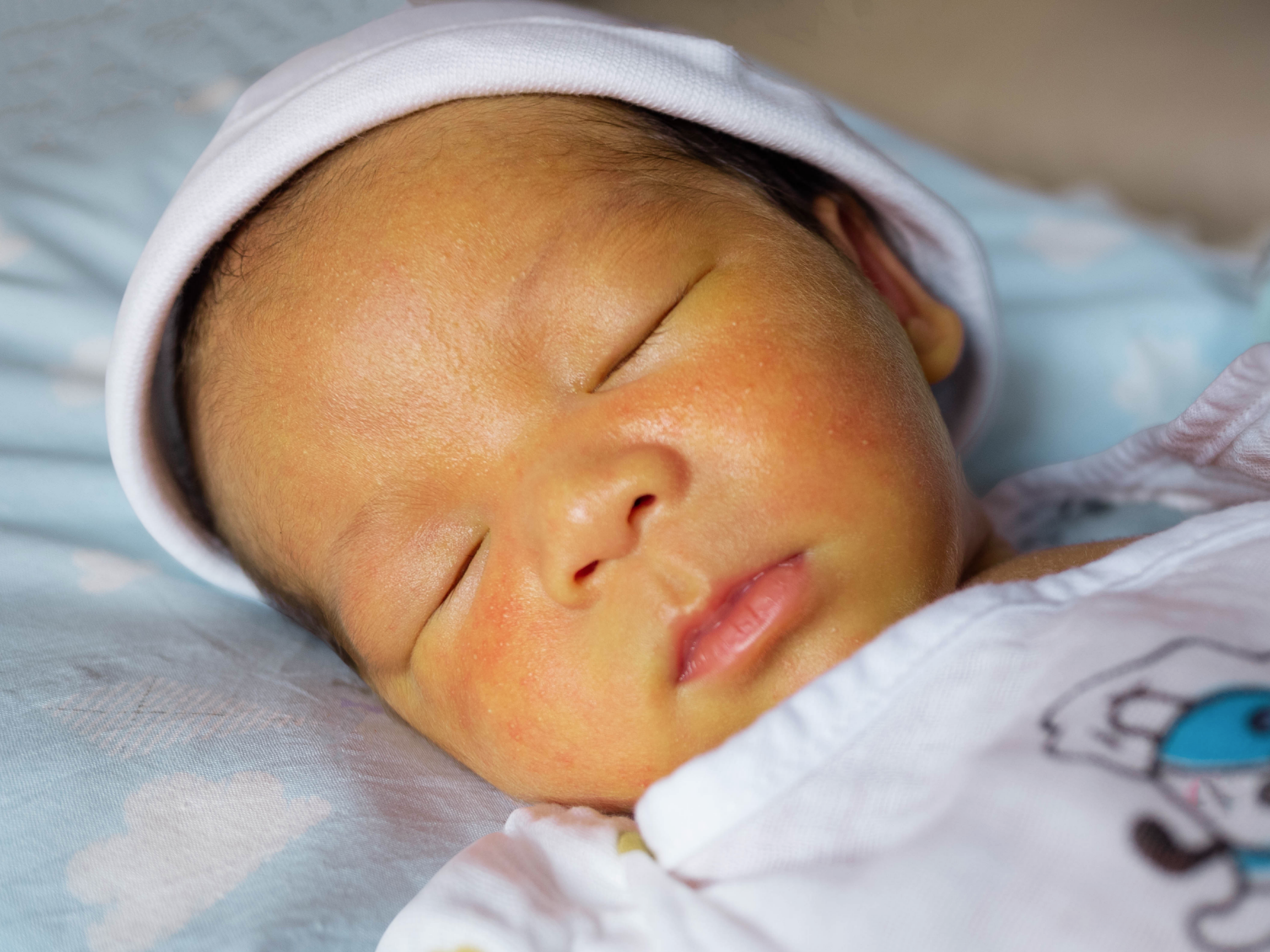
You are changing a diaper on day three, half awake, and the light hits your baby’s face at a certain angle. There is a yellow tint that was not there yesterday. You tilt the lamp. You look at the whites of their eyes. You look again.
That pause you are having right now happens in almost every home with a newborn in it. About half to two thirds of full term babies develop some yellowing in the first week, and premature babies even more often. It is one of the most expected findings of the newborn period, and it comes with a clear monitoring plan that your pediatrician already knows by heart.
Why It Happens
Babies are born with extra red blood cells. They needed them in the womb, where oxygen came through the placenta. After birth, those extra cells start breaking down, and that breakdown releases a substance called bilirubin.
Bilirubin leaves the body through the liver and then out through stool. A newborn liver is brand new at this job. It processes slowly for the first several days while it comes fully online. During that window, bilirubin can build up faster than it clears, and the skin and eyes pick up a yellow cast.
So the yellow is the visible sign of a liver learning its rhythm. Levels typically peak somewhere around day three to five, then come down on their own as feeding picks up and the liver catches up.
How to Check at Home
Between hospital discharge and your first pediatrician visit, you are the one watching. Here is what actually helps:
Look in natural daylight, near a window, with the room lights off. Indoor lighting shifts skin tones and makes this harder than it needs to be.
Press gently on your baby’s forehead or nose with one finger, then lift. Look at the color of the skin the instant it blanches. Yellow will show clearly in that moment.
Then check how far down the body it goes. Jaundice moves head to toe as bilirubin rises, so the chest, belly, and legs tell you more than the face does. Yellowing that has reached the belly or below is worth a call.
Check the whites of the eyes and the inside of the gums too, since those show color regardless of skin tone. This matters, because visual checks are less reliable on darker skin, and yellowing can be missed. If you have any question at all, ask for a bilirubin level. It is a quick skin sensor or a small blood sample.
When to Call Your Pediatrician
Call the same day if you notice:
- Yellowing that has spread to the chest, belly, arms, or legs
- Whites of the eyes turning deeply yellow
- Your baby is very sleepy, hard to rouse, or feels limp when you pick them up
- Two feeds missed in a row, or your baby will not wake to eat
- Fewer wet or dirty diapers than the day before
- A cry that sounds high pitched and different from their usual
- Stiffness, arching backward, or unusual posturing
- Any yellowing in the first 24 hours of life
Also call if your baby is still visibly yellow past three weeks, or if the stool is pale and chalky white. That combination needs a different workup and it is worth flagging early.
What Raises the Odds
Some babies are more likely to need treatment:
Born before 38 weeks. A younger liver takes longer and a late preterm baby often feeds less vigorously.
Feeding is still getting established. Less milk in means less stooling, and bilirubin leaves through stool. This is the most common reason levels climb higher than expected in the first week.
Blood type differences. Rh or ABO incompatibility between you and your baby speeds up red cell breakdown.
Bruising or a cephalohematoma from delivery. More bruised cells means more bilirubin released as they clear.
A sibling who needed phototherapy. Family history counts here.
East Asian ancestry, or a known G6PD deficiency in the family. Both are on the standard risk list your provider screens for.
What Testing Looks Like
Before discharge, your hospital will check a bilirubin level, either through a light sensor on the skin or a heel stick. That number gets plotted against your baby’s exact age in hours, which is why the timing of the check matters so much.
That plot is what drives everything else. It tells your team whether to recheck in six hours or forty eight, and whether the number is climbing toward the treatment line for your baby’s specific risk profile. If there is a blood type concern, a Coombs test looks for antibodies affecting red cells.
Ask for the actual number and the follow up window before you leave the hospital. Write it down. It makes your first pediatrician visit much more useful.
How It Gets Treated
Most babies need feeding and follow up only. Frequent feeding, roughly eight to twelve times in twenty four hours, moves bilirubin out through stool. Waking a sleepy baby to feed is doing real clinical work.
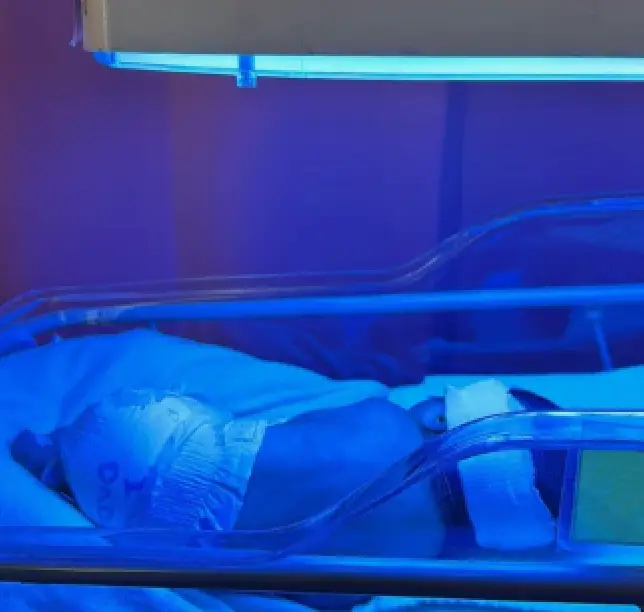
Phototherapy is the treatment when levels reach the threshold for your baby’s age and risk. Blue green light changes the shape of bilirubin so the body can clear it without waiting on the liver. Your baby lies under the light in a diaper with eye protection, and comes out for feeds. Most courses run about a day or two, and some families qualify for a home light system.
IV fluids may be added if a baby is dehydrated or levels are climbing fast.
Exchange transfusion is reserved for very high levels that do not respond to light. It is uncommon.
A note on sunlight: putting your baby directly in the sun is not a recommended treatment. The AAP advises against it because of sunburn and overheating risk, and because you cannot control the dose. If your baby’s level is high enough to need light, it needs medical light.
The One Thing to Do Today
Keep a running count of feeds and diapers, written down or logged as it happens. Somewhere around day four you want to be seeing roughly six wet diapers and three or more stools that have turned from black to yellow.
When you call your pediatrician, that count is the most useful thing you can hand them. “She fed five times in the last twenty four hours and had two wet diapers” gets a faster, more accurate answer than “she seems more yellow.” The Baby Genie app tracks both, so the numbers are ready when someone asks.
The Wrap-Up
Jaundice is one of the most watched, most treatable things in the newborn period. Hospitals check for it before you go home, pediatricians check again within days, and the treatments work well and work fast.
Your job in all of this is smaller than it feels: feed often, look at your baby in daylight once a day, and call when something on the list above shows up. Keep every early appointment, even the ones that feel like a lot with a days old baby.
FAQ: What Parents Are Asking About Jaundice
❓ Is jaundice common in newborns?
Yes. Roughly six in ten full term babies show some degree of it, and it is more common in premature babies.
❓ How long does it usually last?
Formula fed babies typically clear within about two weeks. Breastfed babies often stay slightly yellow for three weeks or a bit longer, which can be normal. Yellowing past three weeks should be checked.
❓ Can I treat it with sunlight?
No. The AAP does not recommend sun exposure as a treatment because of sunburn and overheating risk. Medical phototherapy uses a controlled wavelength and dose that a window cannot provide.
❓ Should I stop breastfeeding?
No. Keep going. Frequent nursing is one of the most effective things you can do to bring levels down. If milk supply is still coming in, ask about a lactation consult or short term supplementation. That conversation is about getting more volume in, and it is a normal part of the first week.
❓ Why do breastfed babies see this more often?
Two separate things. In the first days, a baby who is not yet getting much volume stools less, so bilirubin lingers. Later, substances in mature milk can slow bilirubin clearance slightly, which is harmless and passes.
❓ What is phototherapy actually like?
Your baby lies under blue green light wearing a diaper and eye shields, and comes out for feeds. Most babies sleep through most of it. Courses usually run about twenty four to forty eight hours.
❓ Will we have to stay in the hospital?
Most babies with mild jaundice do not need treatment at all. If levels reach the threshold, some families can do light therapy at home depending on the level and your insurance.
❓ Does jaundice cause lasting harm?
Very rarely. Treatment thresholds sit far below the levels associated with brain injury, which is exactly why the checks are scheduled so closely in the first week. Kernicterus is the severe complication, and it is prevented by the monitoring your baby is already receiving.
❓ What if I cannot tell whether my baby looks yellow?
Ask for a bilirubin level. Visual checks are unreliable, especially on darker skin tones, and no one will think you are overreacting for asking.