

What’s Normal, What’s Not & When to Worry?
Newborn weight loss in the first few days after birth is expected and happens because babies shed excess fluid accumulated in the womb. Breastfed babies typically lose 7 to 8 percent of their birth weight and formula-fed babies lose around 5 percent. Most newborns begin regaining weight by day 3 to 4 and return to their birth weight by 10 to 14 days. Contact your pediatrician if your baby loses more than 10 percent of their birth weight, shows signs of dehydration, or has not returned to birth weight by two weeks.

Am I feeding them enough? Is something wrong? Did I miss something?
Here is what helps: newborn weight loss in the first few days is not a sign that something went wrong. It is a predictable part of how the body adjusts after birth. Understanding what is happening and what to watch for makes it a lot easier to move through those early days with clarity instead of anxiety.
How Much Weight Do Newborns Lose?
After birth, babies shed the excess fluid they accumulated in the womb. This is the main reason for early weight loss and it happens regardless of how well feeding is going.
Breastfed babies typically lose 7 to 8 percent of their birth weight in the first few days. Formula-fed babies usually lose around 5 percent. These ranges are considered part of normal newborn adjustment.
If your baby loses more than 10 percent of their birth weight, that is worth a conversation with your pediatrician. It does not automatically mean something is seriously wrong, but it does mean feeding and hydration need a closer look.
When Do Babies Gain the Weight Back?
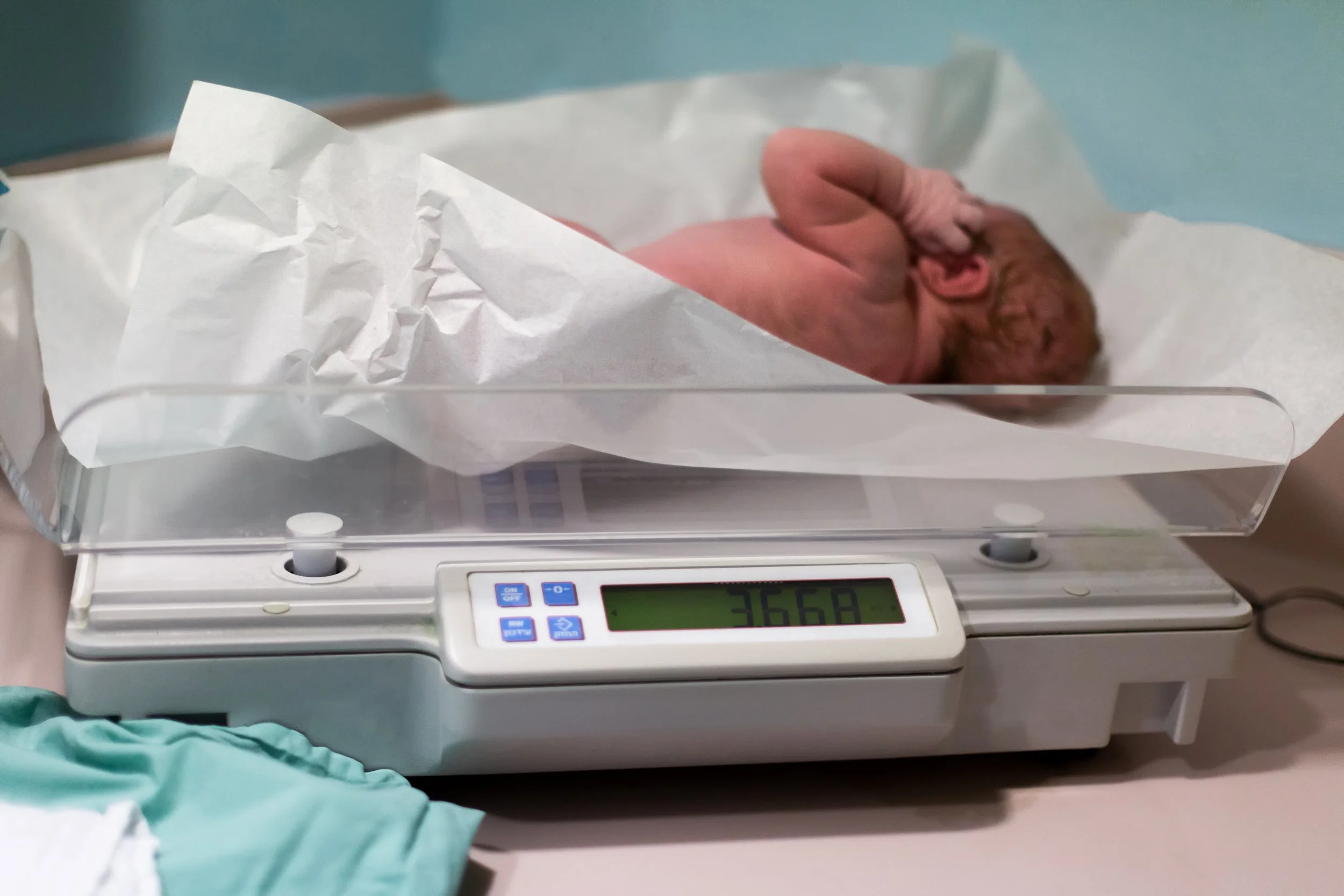
Most newborns begin regaining weight by day 3 to 4 and return to their birth weight by 10 to 14 days. Breastfed babies sometimes take a little longer to get back to their birth weight, which is why the two-week mark is typically used as the general guideline.Regular pediatric visits in those early weeks exist specifically to track this. Weight checks give your care team early information and give you reassurance that things are moving in the right direction.
Signs of Dehydration & When to Call a Doctor
Some weight loss is expected. Dehydration is a different concern and worth knowing the signs of.
Reach out to your pediatrician if you notice:
Fewer than six wet diapers per day Dark yellow urine A baby who seems unusually sleepy or difficult to wake Dry mouth or lips A sunken soft spot on the top of the head
These signs together with significant weight loss are worth a same-day call. You do not need to wait for a scheduled visit.
How to Support Your Baby’s Weight Gain
The most effective thing you can do is focus on consistent, effective feeding.
Feed frequently. Newborns typically need to feed 8 to 12 times in 24 hours. For formula-fed babies, that usually means 2 to 3 ounces every 2 to 3 hours.
Watch for swallowing. During breastfeeding, listen for audible gulping. That sound tells you milk is transferring.
Let your baby lead. A baby who is getting enough will naturally release the breast or turn away from the bottle when full.
Track diapers. Six or more wet diapers per day is a reliable sign of adequate hydration.
Try skin-to-skin contact. Keeping your baby close supports milk production, encourages latching, and regulates your baby’s temperature and stress levels.
If you are breastfeeding and feeling uncertain about whether your baby is transferring milk well, a lactation consultant can make a significant difference in those early days
.

The Wrap Up
Newborn weight loss is one of those things that sounds alarming the first time you hear it and makes complete sense once you understand what is actually happening. Your baby’s body is adjusting to life outside the womb, and shedding that extra fluid is part of that process. With consistent feeding, regular checkups, and a little time, most babies are back to their birth weight within two weeks. If something feels off before then, your pediatrician is the right call. Trusting your instincts and asking questions early is always the right move.
FAQ: What Parents Ask About Newborn Weight Loss
❓ Is it normal for my newborn to lose weight after birth?
Yes. Weight loss in the first few days is expected and happens because babies shed excess fluid from the womb. Breastfed babies typically lose 7 to 8 percent of their birth weight and formula-fed babies lose around 5 percent. This is part of normal newborn adjustment, not a sign that feeding is failing.
❓ How much weight loss is too much for a newborn?
Losing more than 10 percent of birth weight is the general threshold that warrants a closer look. It does not automatically mean something is seriously wrong, but your pediatrician will want to assess feeding, hydration, and overall wellbeing at that point.
❓ When should my newborn be back to their birth weight?
Most babies return to their birth weight by 10 to 14 days. Breastfed babies sometimes take a little longer than formula-fed babies. If your baby has not returned to birth weight by two weeks, let your pediatrician know.
❓ How do I know if my baby is getting enough milk?
Wet diapers are one of the most reliable indicators. Six or more wet diapers per day is a good sign. During breastfeeding, audible swallowing and a baby who releases the breast on their own are also reassuring signs. If you are unsure, a lactation consultant can do a weighted feed to measure exactly how much milk your baby is transferring.
❓ Can breastfeeding affect how much weight my baby loses?
Yes. Breastfed babies tend to lose a little more weight initially because milk supply takes a few days to come in fully. This is why colostrum, which is the early milk your body produces before full milk comes in, is so important. It is small in volume but packed with nutrients and exactly what your baby needs in those first days.
❓ What are the signs that my newborn is dehydrated?
Watch for fewer than six wet diapers per day, dark yellow urine, unusual sleepiness or difficulty waking, dry lips or mouth, and a sunken soft spot on the top of the head. If you notice any of these, call your pediatrician the same day.
❓ Does skin-to-skin contact really help with weight gain?
It does, indirectly. Skin-to-skin contact supports milk production, encourages more frequent feeding, and helps regulate your baby’s stress and temperature. All of those things together create better conditions for feeding and weight gain.
❓ When should I see a lactation consultant?
If breastfeeding feels painful, your baby seems unsatisfied after feeds, you are unsure whether your baby is latching well, or your baby is losing more weight than expected, a lactation consultant is a great early resource. You do not need to wait until things feel like a crisis.