

What to Expect, What They Look Like, and How to Support Your Baby
Newborn milestones in the first three months are subtle and easy to miss if you are looking for big dramatic moments. The American Academy of Pediatrics groups early development into four areas: social and emotional, language and communication, cognitive, and movement. Early signs include brief eye contact, calming at the sound of your voice, startling at loud sounds, small coos and gurgles, tracking objects with their eyes, and lifting their head briefly during tummy time. Milestones are ranges, not deadlines. The most powerful thing you can do to support your baby’s development is respond to them, talk to them, and be present in everyday moments.
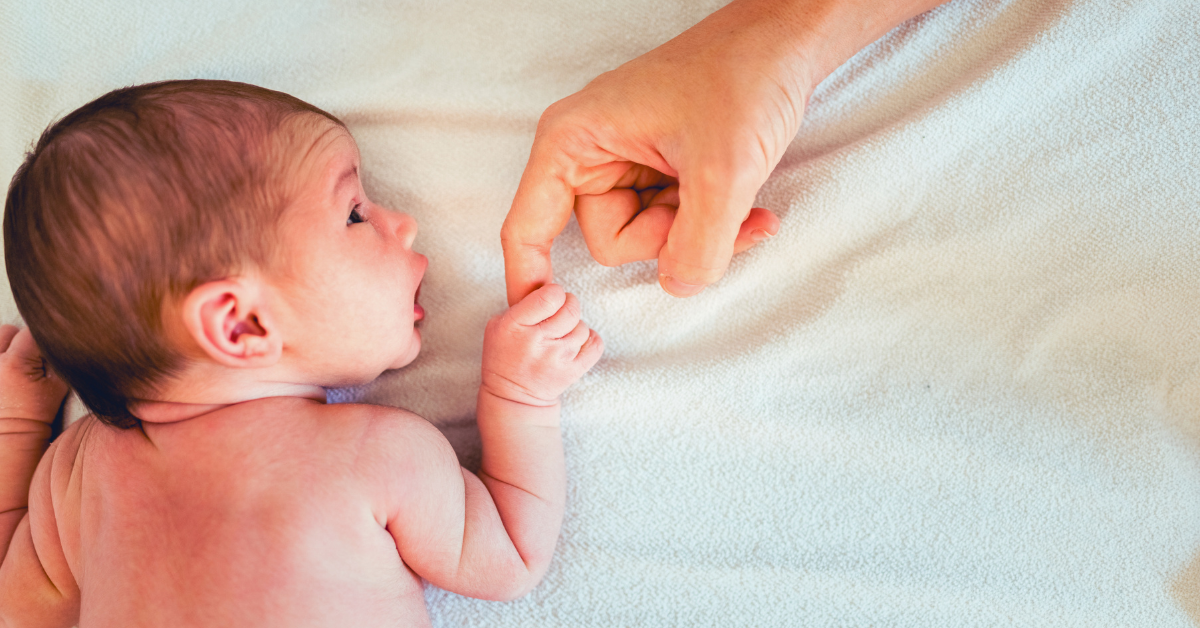
“Is my baby doing what they’re supposed to be doing?”
You might be watching your baby closely, waiting for something obvious to happen. A big smile. A clear sound. Some kind of sign that you’re actually on the right track.
Instead, they kind of just lay there like a little sack of potatoes. You get these tiny, random movements and weird faces that leave you wondering… “Was that something? Or was it just nothing?”
Here’s the thing: Newborn milestones aren’t usually these big, dramatic moments. Most of the time, they’re just small, quiet signs that your baby’s brain and body are figuring out how to work. Even the tiniest twitch or a split-second of eye contact is a huge step in them learning how to function in the world.
What are newborn milestones?
Newborn milestones are basically just the early skills your baby starts to show during their first three months. The American Academy of Pediatrics (the experts on this stuff) usually groups development into four main areas:
- Social and emotional: How they start to bond and react to you.
- Language and communication: Those first little sounds and ways of “talking.”
- Cognitive: How they’re learning, thinking, and soaking everything in.
- Movement and physical development: How they’re starting to control their tiny bodies.
At this stage, milestones are super subtle. Your baby isn’t really “performing” for an audience yet. They’re just busy adapting to a brand-new world.
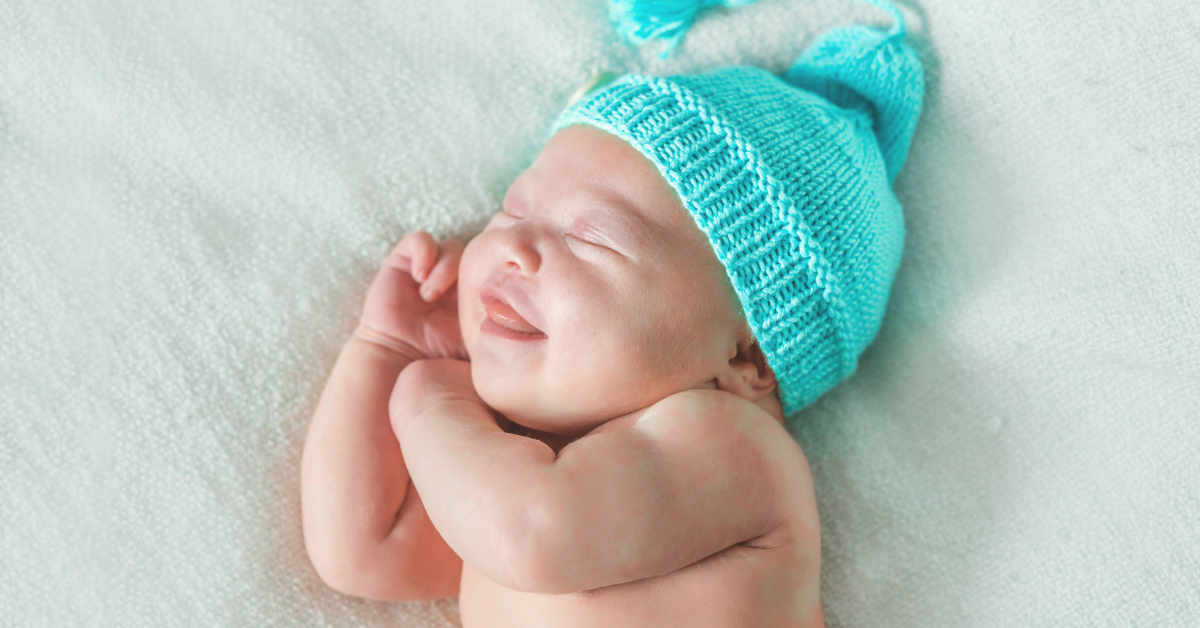
What newborn milestones actually look like (0–3 months)
This is where most parents feel a little unsure. You’re always told what milestones are, but not what they actually look like in real life. It’s hard to know what you’re supposed to be seeing when you’re just staring at a tiny human all day.
Let’s break it down in a way that actually makes sense. Instead of looking for big milestones, we’re going to look for those tiny, everyday shifts that show your baby is growing.
Social and Emotional Milestones
- Briefly looks at your face: Even just a split second of “locking eyes” counts.
- Calms down when you hold or talk to them: This shows they feel safe with you.
- Starts recognizing your voice: They might get still or turn their head when they hear you.
- The first “real” smile: Around 6–8 weeks, they may begin to smile intentionally rather than just in their sleep.
At first, connection looks subtle. A few seconds of eye contact is a huge milestone.
Language and Communication Milestones
- Startles at loud sounds: This shows their hearing and reflexes are working together.
- Turns toward familiar voices: They are starting to pick your voice out of the crowd.
- Makes small sounds like coos or gurgles: These are the building blocks of talking.
- Begins early “back-and-forth” moments: You make a sound, and they might make one back.
These little noises are your baby’s very first version of a conversation.
Cognitive (Learning) Milestones
- Watches faces closely: They are studying you to learn about humans.
- Follows objects briefly with their eyes: This is called “tracking,” and it shows their eye muscles are getting stronger.
- Begins noticing their hands: They might stare at their fingers like they just discovered a new toy.
- Stares at objects for short periods: They are starting to process shapes and colors.
This is just your baby learning how to focus, track, and soak up information about their new world.
Movement and Physical Milestones
- Moves arms and legs actively: Those little kicks and wiggles are how they build muscle.
- Brings hands toward their mouth: This is a big step in coordination and self-soothing.
- Opens and closes their hands: They’re moving away from that tight newborn fist and starting to explore.
- Lifts their head briefly during tummy time: Even a tiny, shaky lift shows their neck and back are getting stronger.
These early movements might look random, but they’re actually the foundation for every big move your baby makes next.
Why milestones are not a race
This is where most stress comes from. You see another baby smiling earlier. You read something online. You start comparing.
But here’s what you need to know:
Milestones are ranges, not deadlines to be met.
The AAP emphasizes that development is unique to every child. What matters most is steady progress over time, not hitting a mark at the exact same moment as everyone else. Your baby is mastering skills on their own schedule and at their own pace.
How to help your baby reach milestones
The best part is, you don’t have to worry about buying expensive toys or figuring out some super complicated routine. Honestly, just being there and hanging out with your baby is exactly what they need. That simple back-and-forth connection you have is actually the most effective way to help them learn and grow.
It’s as simple as:
- When your baby looks at you, you look back.
- When they make a sound, you answer them.
- When they fuss, you comfort them.
This little back-and-forth is actually what builds their brain.
What your baby needs from you
Instead of trying to do more, just focus on this: be present in the everyday moments.
Here’s what usually works best:
- Make eye contact during feeding: It’s one of the easiest times to bond.
- Talk to your baby during diaper changes: Narrate what you’re doing or just tell them about your day.
- Do short, calm tummy time sessions daily: Even a few minutes at a time helps them build strength.
- Use your face and voice more than toys: To your baby, you are the most interesting thing in the room.
Research consistently shows that real human interaction rather than fancy gadgets is the most powerful driver of early development.
When to pay closer attention
Most of the time, those little differences are totally normal. But there are a few things that are worth a quick chat with your pediatrician.
Reach out if your baby:
- Doesn’t respond to sound
- Rarely makes eye contact
- Feels very floppy or very stiff
- Isn’t moving arms or legs much
- Stops doing something they were previously doing
These things don’t always mean there’s an issue, but it’s always better to get them checked out just for peace of mind.
The Wrap Up
Newborn milestones are easy to miss if you are looking for something big, but they are happening every single day. A glance, a sound, a small movement. That is your baby learning. Growth is a natural process that unfolds on its own, and your simple daily presence provides everything your baby needs to thrive. You are responding, you are paying attention, and that is exactly how development is built. You and your baby are right where you need to be.
FAQ: What parents are really asking about newborn milestones
❓ What are the first milestones a newborn should have?
Early milestones include looking at your face, reacting to sound, moving their body, and beginning to calm with your voice or touch.
❓ When should my baby start smiling?
Many babies begin social smiling around 6–8 weeks, though it can vary slightly.
❓ Is it normal if my baby isn’t hitting milestones yet?
Yes. Development happens within a range. One delay alone is usually not a concern.
❓ How can I help my newborn develop faster?
You don’t need to speed it up. Responding to your baby, talking to them, and being present supports development naturally.
❓ Do toys help with newborn development?
Not as much as interaction does. Your face, voice, and touch are more important at this stage.
❓ How much tummy time should I do?
Start with 1–2 minutes a few times a day and increase gradually as your baby tolerates it.
❓ What if my baby hates tummy time?
That’s common. Try doing it on your chest or in short sessions. It still counts.
❓ When should I worry about developmental delays?
If your baby shows very limited interaction, movement, or responsiveness over time, or loses skills, talk to your pediatrician.
❓ Do premature babies follow the same milestones?
They follow adjusted age milestones, based on their due date rather than birth date.
❓ Is it bad to compare my baby to others?
It’s natural, but not helpful. Babies develop at different rates, and comparison often creates unnecessary stress.