

A fever in a newborn can be scary, especially for new parents. It’s natural to feel worried when your little one suddenly feels warm or isn’t acting like themselves. But here’s the most important thing to know: any fever in a newborn is considered an emergency.
Let’s break down why this happens, what to do, and how to make sure your baby gets the right care as quickly as possible.
Why Is Fever in a Newborn So Serious?
Fever in a newborn is very different from fever in older children or adults. A rectal temperature of 100.4°F (38°C) or higher in a baby younger than 1 month is a sign that something potentially serious could be happening. Here’s why:
1. Immature Immune System
Newborns don’t yet have strong immune defenses. This makes them more vulnerable to infections like sepsis, meningitis, or urinary tract infections, which can progress quickly.
2. Subtle Symptoms
Babies often don’t show clear signs of illness beyond a fever. Sometimes, a fever is the only clue that something serious is happening.
If your baby is not feeding well or just seems “off,” checking a rectal temperature is always a smart move.
3. High Risk of Serious Bacterial Infections (SBIs)
Because newborns can become ill very quickly, pediatricians take every fever seriously. Early evaluation and treatment can prevent complications and protect your baby’s health.
What to Do if Your Newborn Has a Fever
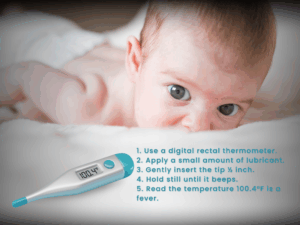
If your baby has a fever, take these steps immediately — do not wait to see if symptoms improve.
1. Take Their Temperature Correctly
Use a digital rectal thermometer. Ear and forehead thermometers are unreliable at this age.
 A rectal temperature of 100.4°F (38°C) or higher is considered a true fever in a newborn.
2. Call Your Pediatrician Immediately
Contact your baby’s healthcare provider or the on-call pediatrician right away.
If you cannot reach them, go straight to the nearest emergency room. Timing matters.
3. Do Not Give Fever-Reducing Medications
Avoid acetaminophen or ibuprofen in babies younger than 3 months unless explicitly directed by a doctor. These medications can mask symptoms and delay diagnosis.
4. Keep Your Baby Comfortable
Dress them lightly and keep the environment cool.
Breastfeed or offer formula as usual, we want to keep baby hydrated at all times.
5. Be Prepared for a Medical Evaluation
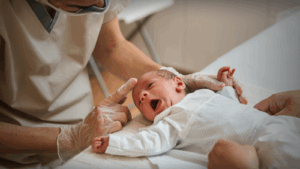
At the hospital, your baby may have:
• Bloodwork
• Urine testing
• A lumbar puncture (to rule out meningitis)
These tests help identify or rule out serious infections.
FAQ
 What if my newborn feels warm but doesn’t have a fever?
Babies often feel warm from swaddling, overdressing, or a warm room. The only reliable way to know is a rectal thermometer.
A temperature of 100.4°F (38°C) or higher is a medical emergency for infants under 3 months.
When is it safe to give acetaminophen or ibuprofen to a baby?
Acetaminophen (Tylenol): Safe after 3 months, with pediatric guidance.
Ibuprofen (Motrin/Advil): Safe after 6 months only.
For newborns, no fever-reducing medicine is appropriate — seek medical care immediately instead.
What should I do first if my newborn has a fever?
Go straight to the ER or call your pediatrician.
Skip fever reducers, cold baths, and home remedies.
Newborn fever can signal a serious infection and requires urgent evaluation.
Can teething cause a fever in a newborn?
No. Teething does not cause a fever of 100.4°F (38°C) or higher.
If your baby has a true fever, assume it’s from illness and get medical care right away.
What temperature is considered a fever in a newborn?
A rectal temperature of 100.4°F (38°C) or higher.
Ear, forehead, and underarm thermometers aren’t accurate enough for newborn diagnosis.