

Newborn brain development begins at birth and progresses rapidly during the first three years of life. Babies learn through sensory experiences, emotional connection, movement, sleep, and responsive caregiving. Everyday interactions such as talking, holding, and making eye contact help build neural pathways that support language, emotional regulation, memory, and future learning.

You might quietly wonder if you are doing enough
Your baby sleeps for long stretches.
They cannot play yet.
They cannot tell you what they need in words.
Some days feel repetitive. Feed. Change. Rock. Repeat.
It is very common for parents to question whether real learning is happening during this stage. You might even compare your baby to others or worry that you should be doing more to support development.
But here’s what you need to know:
Your baby’s brain is growing and organizing itself every single day through the simple care and connection you are already providing.
Newborn Brain Development Begins at Birth
From birth, a baby’s brain is actively forming new neural connections at an extraordinary pace. Scientists describe this period as one of intense neuroplasticity, meaning the brain is highly adaptable and shaped by experience.
Every sound your baby hears, every gentle touch, every familiar voice helps guide this wiring process. These experiences strengthen pathways that support emotional security, communication, movement, and learning.
Connections that are used often become more efficient. Others gradually fade through a natural process called synaptic pruning. This allows the brain to become organized based on the baby’s real environment.
For many parents, it can be reassuring to understand that development does not depend on constant stimulation. What matters most is consistent, responsive interaction.
How Connection Helps Build Your Baby’s Brain
Babies learn through repeated back-and-forth interaction with caregivers.
When your baby cries, looks toward your face, or makes soft sounds and you respond with comfort, eye contact, or your voice, their brain begins to recognize patterns of safety and predictability.
Researchers call this serve and return interaction.
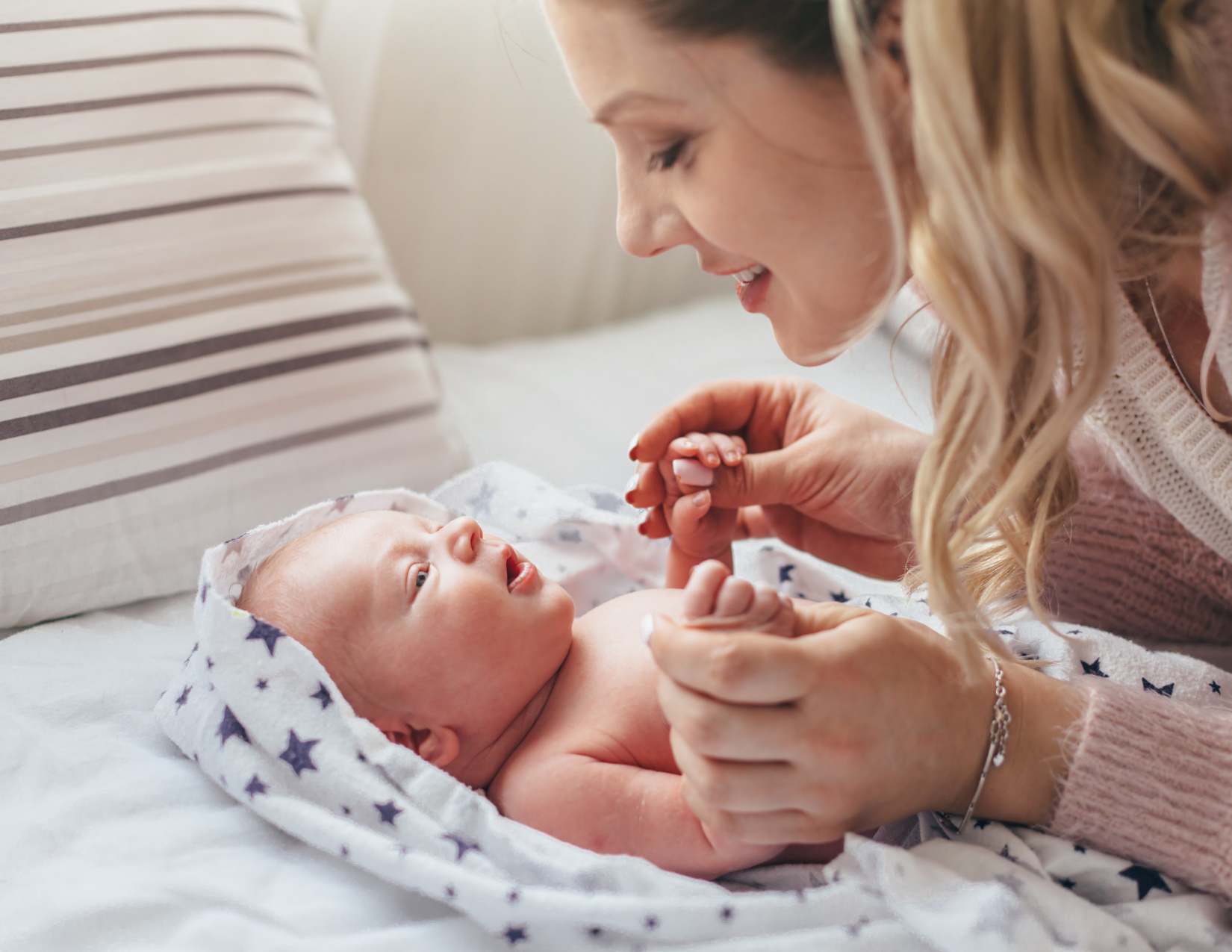
Over time, these experiences help shape areas of the brain involved in emotional regulation, attention, and social understanding. Your baby is learning how relationships work long before they can explain it.
Parents sometimes worry that responding too quickly will create dependence. In reality, consistent responsiveness helps build the internal sense of security that supports future independence.
Stress Regulation and Emotional Brain Growth
Adjusting to life outside the womb is a major transition. Newborn nervous systems are still learning how to manage stimulation, hunger, fatigue, and discomfort.
Short periods of distress are normal. Supportive caregiving helps regulate these stress responses.
When you hold, rock, feed, or speak calmly to your baby, their heart rate and breathing patterns begin to stabilize. Stress hormone levels gradually settle. This shared calming process is known as co-regulation.
Through repeated experiences of being soothed, babies begin developing their own capacity to settle. This is an important step toward emotional resilience later in childhood.
Parents who understand this process often feel more confident responding to their baby’s cues.
Why Sleep Supports Newborn Brain Development
Newborn sleep plays an essential role in neurological development.
During sleep, the brain processes sensory information gathered while awake. Neural connections are strengthened, memory pathways begin forming, and growth hormones that support brain maturation are released.
Frequent waking can feel exhausting for caregivers. At the same time, shorter sleep cycles are developmentally expected and support rapid brain growth.
Knowing this can help parents view newborn sleep patterns through a developmental lens rather than as a problem to fix.
Movement and Motor Skills Shape Brain Wiring
Motor experiences help build important brain connections.
Activities such as supervised tummy time, gentle rocking, stretching arms and legs, and allowing babies to observe their surroundings support sensory integration and coordination.
Before babies reach visible milestones like rolling or crawling, their brains are already practicing the underlying motor patterns needed for these skills.
Parents sometimes feel pressure to accelerate milestones. Development typically unfolds best when babies are given safe opportunities to move, explore, and interact at their own pace.
Talking to Your Baby Supports Language Development
A caregiver’s voice provides rich stimulation for the developing brain.
Narrating daily routines, singing, and responding to coos help babies learn the rhythm of communication. Even before understanding words, infants are absorbing tone, facial expressions, and patterns of conversation.
These early interactions support auditory processing, vocabulary development, and future reading skills.
Parents who feel unsure about what to say can simply describe what they are doing or noticing. This natural communication is already meaningful learning.
A Daily Tip to Support Brain Development
Look for one daily routine where you can slow down and focus on connecting with your baby.
During feeding or diaper changes, take your time. Make eye contact. Speak in a warm tone. Pause occasionally to allow your baby time to respond with facial expressions or sounds.
This repetition helps strengthen neural pathways while also creating emotional connection.
Consistency over time is more powerful than trying to do many activities at once.

Why the First Three Years Matter for Brain Growth
Early brain development lays the foundation for later learning, emotional regulation, and social relationships.
Predictable caregiving routines help the brain organize patterns related to trust, attention, and problem solving. These foundational systems influence how children approach challenges and relationships as they grow.
Parents do not need special tools or structured programs to support development. Meaningful interaction during everyday caregiving provides powerful learning opportunities.
Understanding this can reduce pressure and help families focus on connection rather than perfection.
FAQ: Newborn Brain Development
❓ How fast does a newborn’s brain develop
Neural connections form rapidly during the first year, especially in response to sensory experiences and emotional interaction.
❓ Do babies learn even when they seem quiet or sleepy
Yes. Infants process sounds, touch, and emotional cues during calm alert states and even while resting.
❓ Can babies become overstimulated
Yes. Too much noise or activity can increase stress signals. Calm, predictable interaction is usually most supportive.
❓ Does tummy time help brain development
Movement strengthens motor and sensory pathways that support coordination and future cognitive skills.
❓ Is screen time helpful for newborn learning
Research shows that live human interaction is far more beneficial than passive screen exposure during infancy.
The Wrap Up
Newborn brain development is shaped through everyday experiences of connection, comfort, movement, sleep, and communication.
While early parenting can feel repetitive and uncertain, these simple caregiving moments are quietly building important neural foundations. Responding with warmth and consistency helps babies develop a sense of safety that supports exploration and learning over time.
Understanding how the brain grows can help parents feel more confident in the care they are already providing.
As you move through the newborn stage, your baby is quietly developing skills that will support them throughout life.