

Why Your Baby Feeding Nonstop
Cluster feeding is when a baby feeds very frequently over a short period of time, often for several hours in a row. It is common during growth spurts, typically around 2 to 3 weeks, 6 weeks, and 3 months, and is most likely to happen in the evenings. Cluster feeding is not a sign of low milk supply. It is your baby’s way of naturally increasing your production to meet their growing needs. As long as your baby is gaining weight and producing enough wet diapers, cluster feeding is a normal and temporary part of infant feeding. It usually resolves within a few days to a week once your supply adjusts.

Cluster feeding is when newborns nurse frequently in short bursts, often in the evening. It’s normal, helps boost milk supply, and supports healthy growth during early development. It’s 7 p.m. You just sat down with your plate of food, and suddenly, crying. You nurse your baby. Ten minutes later, crying again. Back to the breast. An hour later, still latched, your arms are numb, and you’re googling “Do I have enough milk?” while trying not to cry yourself.
Welcome to cluster feeding.
What Is Cluster Feeding?
Cluster feeding is when babies feed in short, frequent bursts, sometimes every 30 to 60 minutes, over a stretch of hours, most often in the evenings. It commonly begins in the first weeks of life and can appear during growth spurts, such as around 2–3 weeks, 6 weeks, and 3 months. Cluster feeding can happen in breastfed, formula-fed, and combo-fed babies. With bottle feeding, the focus is on following hunger cues and using a paced approach to help prevent overfeeding.
Why Do Babies Cluster Feed?
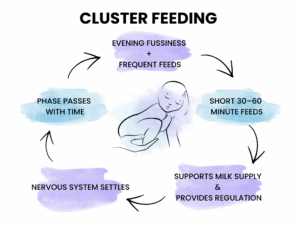
Cluster feeding may feel overwhelming, but it’s actually a smart, biological process: • Boosting milk supply. Breastfeeding works on a supply-and-demand system. By feeding frequently, your baby stimulates more milk production for the next day, like they’re “placing an order” with your body. • Hormones in action. Frequent sucking keeps prolactin (the milk-making hormone) high, supporting long-term supply. • Soothing and regulating. Evening fussiness is common in newborns. Nursing repeatedly helps calm your baby, stabilize their nervous system, and prepare them for longer sleep stretches. Babies who are formula-fed or combo-fed can cluster feed too, often for the same reasons related to growth, comfort, and nervous system regulation, even though milk supply hormones aren’t involved. It’s easy to question yourself during these nonstop evenings, but cluster feeding is your baby’s built-in system for growth, not a sign that something’s wrong.
Cluster Feeding vs. Low Milk Supply
Here’s the mental trap many parents fall into:
“My baby is never satisfied → I must not have enough milk → What’s wrong with me?”
But here’s the truth: cluster feeding does not mean low milk supply. The real signs of good intake are:
- Steady weight gain
- At least 6 wet diapers a day after the first week
- Regular dirty diapers
Breast softness, frequent nursing, or a fussy baby are not reliable indicators. Think of cluster feeding as your baby’s way of training your body to keep up with their growth needs.
How Long Does Cluster Feeding Last?
Most episodes of cluster feeding last a few days to a week. They usually peak during the first 2–6 weeks and again around growth spurts. Once your supply adjusts, feedings typically stretch back out.
How to Survive Cluster Feeding

Cluster feeding can be draining, so here’s how to make it more manageable:
- Set up a cluster feeding station: Snacks, water, phone charger, burp cloths; treat it like a marathon prep kit.
- Pair it with pleasure: Save a show, podcast, or playlist for these feeds so the time feels purposeful, not endless.
- Tag-team if possible: A partner can handle burping, diapers, or refilling your water while you focus on nursing.
- Ground yourself: Try skin-to-skin, dimming the lights, or a quick grounding exercise (like pressing your feet into the floor) to ease the “trapped” feeling.
- Know the red flags: If your baby isn’t gaining weight, isn’t making enough wet diapers, or seems lethargic, check with your pediatrician.
The Wrap Up
Cluster feeding feels endless in the moment, but it is temporary and it is healthy. Most babies do it during growth spurts, then stretch back out once supply catches up. So the next time you are stuck under a baby who will not unlatch, remember that this is a natural process. You are ramping up production and helping your baby grow. Grab your snacks, queue your favorite show, and remind yourself: this is biology, not a breakdown.
FAQ: Common Cluster Feeding Questions
❓ How long does cluster feeding last?
Cluster feeding usually lasts a few days to a week and often happens during growth spurts around 2 to 3 weeks, 6 weeks, and 3 months. Once your milk supply adjusts, your baby’s feeding pattern typically evens out.
❓ Is cluster feeding a sign of low milk supply?
No. Cluster feeding is a normal way for your baby to boost your milk production, not a sign that you are not making enough. As long as your baby is gaining weight and having plenty of wet diapers, your supply is meeting their needs.
❓ Why does my baby cluster feed more at night?
Evening cluster feeds are common because babies are tired and seeking comfort. Frequent nursing during this time also helps stimulate milk production for the next day.
❓ Should I supplement during cluster feeding?
In most cases, supplementation is not necessary and can sometimes interfere with your baby’s natural demand pattern. If there are concerns about weight gain, hydration, or feeding stress, it is worth talking through options with your pediatrician.
❓ When should I call the pediatrician about feeding?
Call your doctor if your baby has fewer than six wet diapers a day after the first week, is not gaining weight, seems very lethargic, or spits up green or bloody fluid.